
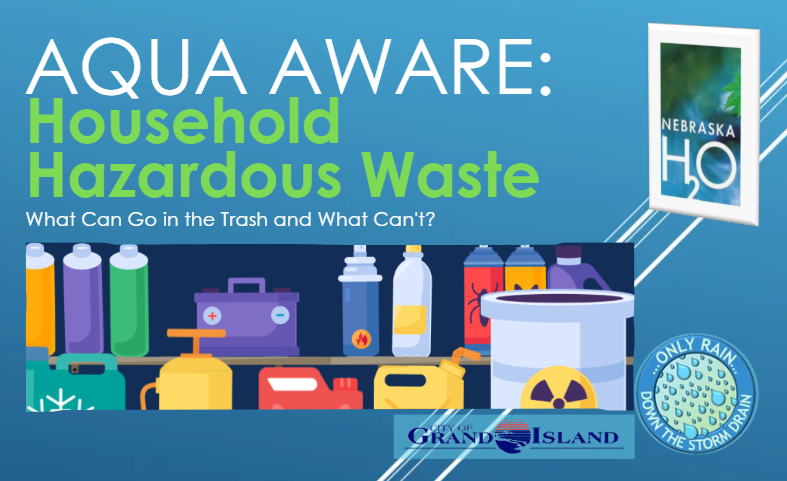
Garages, sheds, and workshops often become long-term storage for products we don’t use every day—paint, cleaners, pesticides, motor oil, solvents, and other chemicals.
Individually, these items seem harmless sitting on a shelf. But when they are spilled, dumped, or washed outdoors, they can become a water quality problem.
During rain events, stormwater can carry these materials into storm drains, roadside ditches, streams, and lakes. Unlike wastewater from your home, stormwater is generally not treated before it reaches local waterways.
That means proper storage and disposal matters.
What Is Household Hazardous Waste?
Household hazardous waste includes common products that contain chemicals that can be harmful to people, pets, wildlife, or water quality.
Examples include:
-
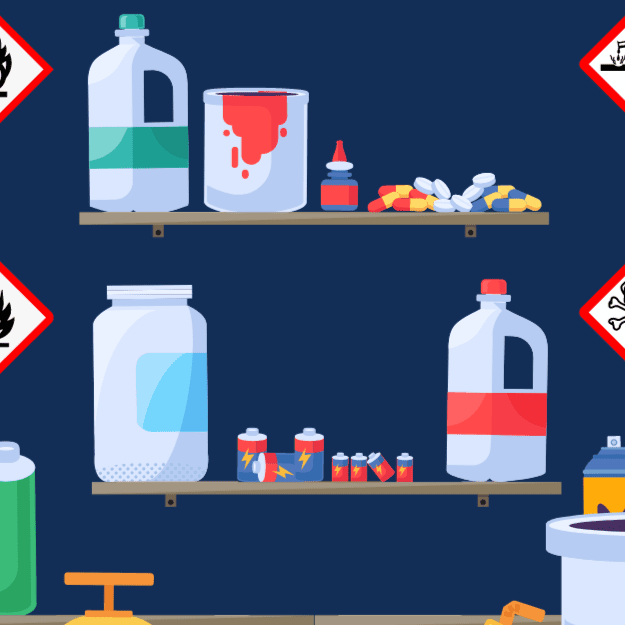
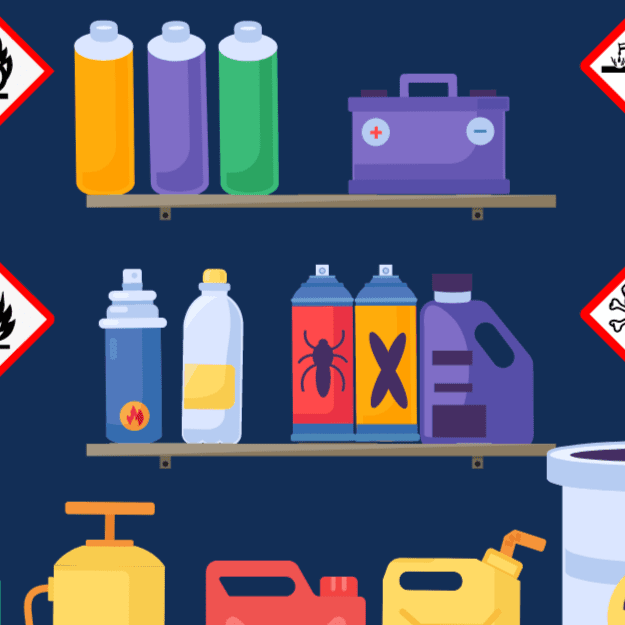
- Paints and paint thinners
- Automotive fluids (oil, antifreeze, brake fluid)
- Pesticides and herbicides
- Solvents and adhesives
- Pool chemicals
- Cleaning products
- Batteries
- Fluorescent bulbs
These materials should never be poured onto the ground, into storm drains, or placed where rainwater can carry them away.

Why Improper Disposal Becomes a Water Problem
Stormwater systems are designed to move rainwater away from streets and neighborhoods quickly. In most cases, that water is not treated before it reaches local waterways.
When hazardous materials are stored improperly or disposed of outside:
-
- Rain can wash chemicals into storm drains
- Small spills can spread across driveways and streets
- Leaks can enter soil and move with runoff
From there, pollutants can reach:
-
- Ditches and drainageways
- Local creeks and rivers
- Lakes and connected groundwater systems
Even small amounts of chemicals can have outsized impacts when repeated across many properties.

Before You Toss It: Sort Your Materials
As you clean out your garage or shed, take a moment to sort items into categories:
Can it be reused or stored safely?
-
- Keep sealed products in original containers whenever possible
- Store in a cool, dry place away from stormwater exposure
Can it be recycled or returned?
-
- Used oil, batteries, and some automotive products often have drop-off options
Does it need special disposal?
-
- Many chemicals require household hazardous waste collection programs
Safe Disposal Options in Our Community
Grand Island residents have several safe options for disposal:
-
- Clean Community Systems – for paints, aerosols, solvents, and many chemicals
- Pharmacy take-back programs – for medications
- Retail drop-off locations – for batteries and used oil (where accepted)
Always follow local program guidance for specific materials.
When in doubt, do not pour it out.

Simple Rules That Protect Water Quality
While organizing your space, keep these rules in mind:
-
- Keep products sealed and labeled
- Store materials away from areas where they could leak outdoors
- Dispose of unknown or mixed chemicals through proper programs
- Don’t rinse containers into driveways or streets
Never pour chemicals into storm drains or onto the ground.
Why It Matters
Stormwater is a direct pathway from neighborhoods to local waterways. What is stored or spilled outside does not stay in place—it moves.
Proper disposal of household hazardous waste helps protect:
-
- Local streams and rivers
- Lakes and recreation areas
- Groundwater resources
- Stormwater infrastructure
Small actions in garages and sheds help prevent larger problems downstream.