
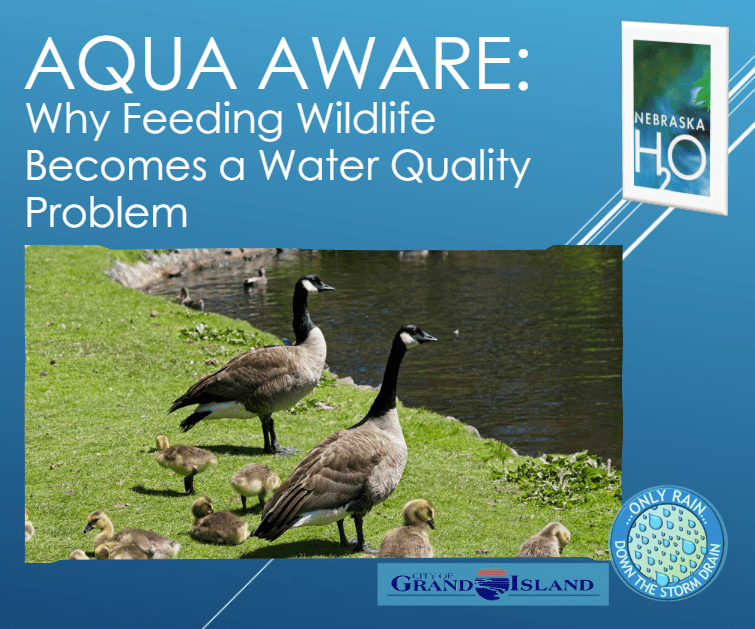
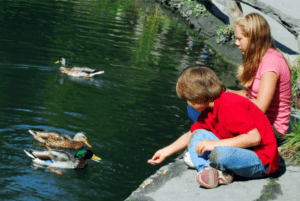
 It seems like a harmless — even kind — thing to do: tossing bread, crackers, or other treats to the ducks and geese at your local pond or park. But feeding wildlife, especially waterfowl like ducks and geese, can actually harm both the animals and the water they live in.
1. Feeding Leads to Huge Concentrations of Birds
When people feed waterfowl, the birds quickly learn that food is easy to find in that spot. This causes more and more birds to hang around, often in numbers far larger than the local habitat can naturally support. Over time, flocks can grow well beyond what a pond or park was designed to handle.
2. More Birds = More Waste in the Water
Waterfowl waste is rich in nutrients like nitrogen and phosphorus — the same nutrients that fuel algae growth in rivers and ponds. When a few birds are naturally present, this nutrient load can be part of a healthy ecosystem. But when birds are unnaturally concentrated because they’ve been fed, their droppings can overwhelm a waterbody.
Too many nutrients in a pond or creek can lead to:
-
Algal blooms, which can choke out other aquatic plants
-
Low oxygen levels, which can stress or kill fish and insects
-
Cloudy or foul‑smelling water that’s less enjoyable for recreation
-
Higher bacterial counts that can pose health risks for people and pets
All of these outcomes are forms of nutrient pollution that degrade water quality.
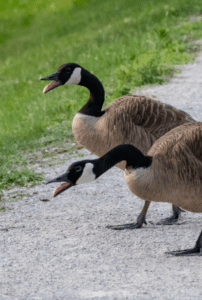
3. Human Food Isn’t Healthy for Wildlife
Breads, chips, popcorn, and other human snacks have little to no nutritional value for waterfowl. These foods fill the birds’ stomachs but don’t provide the nutrients they need to grow, thrive, or migrate at the right times. Over time, this can make birds:
-
Malnourished
-
Dependent on humans for food
-
More susceptible to disease
-
Less likely to migrate (which can cause overcrowding year‑round)
These effects not only harm the birds themselves but also increase the total amount of waste entering local waters because larger, less healthy flocks spend more time in a single area.
4. Vegetation Loss and Shoreline Erosion
Big flocks of waterfowl don’t just leave more waste — they also spend more time grazing and trampling on shorelines and wetlands. This can:
-
Destroy aquatic plants that help filter water
-
Increase shoreline erosion, sending sediment into the water
-
Reduce habitat for other species, including fish and insects
When vegetation is lost, stormwater runoff becomes more likely to carry sediment and pollutants directly into the waterbody instead of being absorbed or filtered by plants.
5. You Can Still Enjoy Wildlife — Just Not Feed It
Watching waterfowl is a wonderful part of being outdoors. The good news is that you don’t have to feed birds in order to enjoy them. Instead:
-
Take photos from a distance
-
Learn about their natural diets
-
Leave breadcrumbs and snacks for humans — not wildlife
When waterfowl find their own natural food and move through the landscape as they evolved to do, they help keep ecosystems balanced and water quality healthier.
Related Links:
Looking for more ways to protect water quality?
Visit Prevent Pollution Around Your Home to explore other everyday actions that help reduce stormwater pollution.