
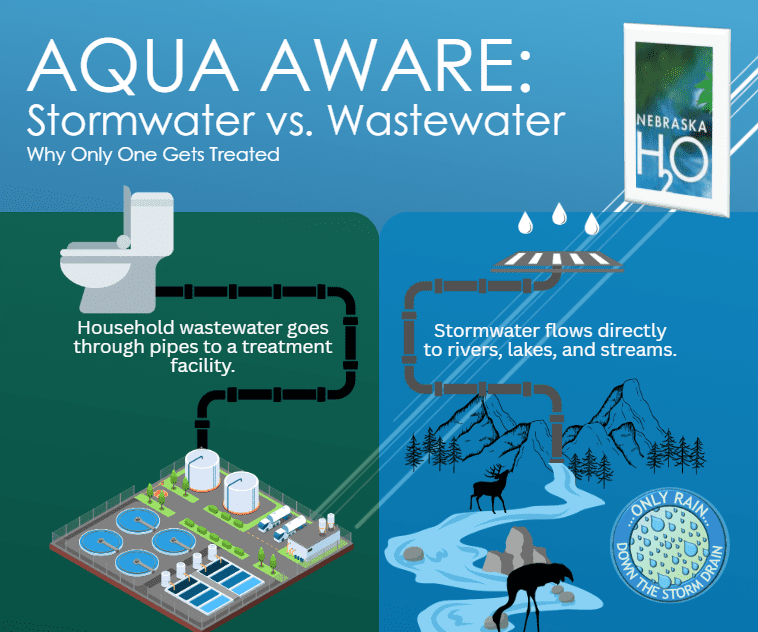
When we talk about water in our communities, it’s easy to assume that all used or moving water gets treated before it reaches a river or lake. But in reality, stormwater and wastewater are two very different types of water, and they are managed very differently by cities, utilities, and environmental agencies.
Understanding the difference helps explain why everyday actions — like rinsing a driveway, leaving pet waste on the grass, or letting oil drip from a car — matter for local water quality.
What Is Wastewater?
Wastewater (sometimes called sewage) is water that’s been used inside our homes, businesses, and industries. It includes water from:
-
Toilets
-
Sinks, bathtubs, and showers
-
Laundry and dishwashing
-
Some industrial processes
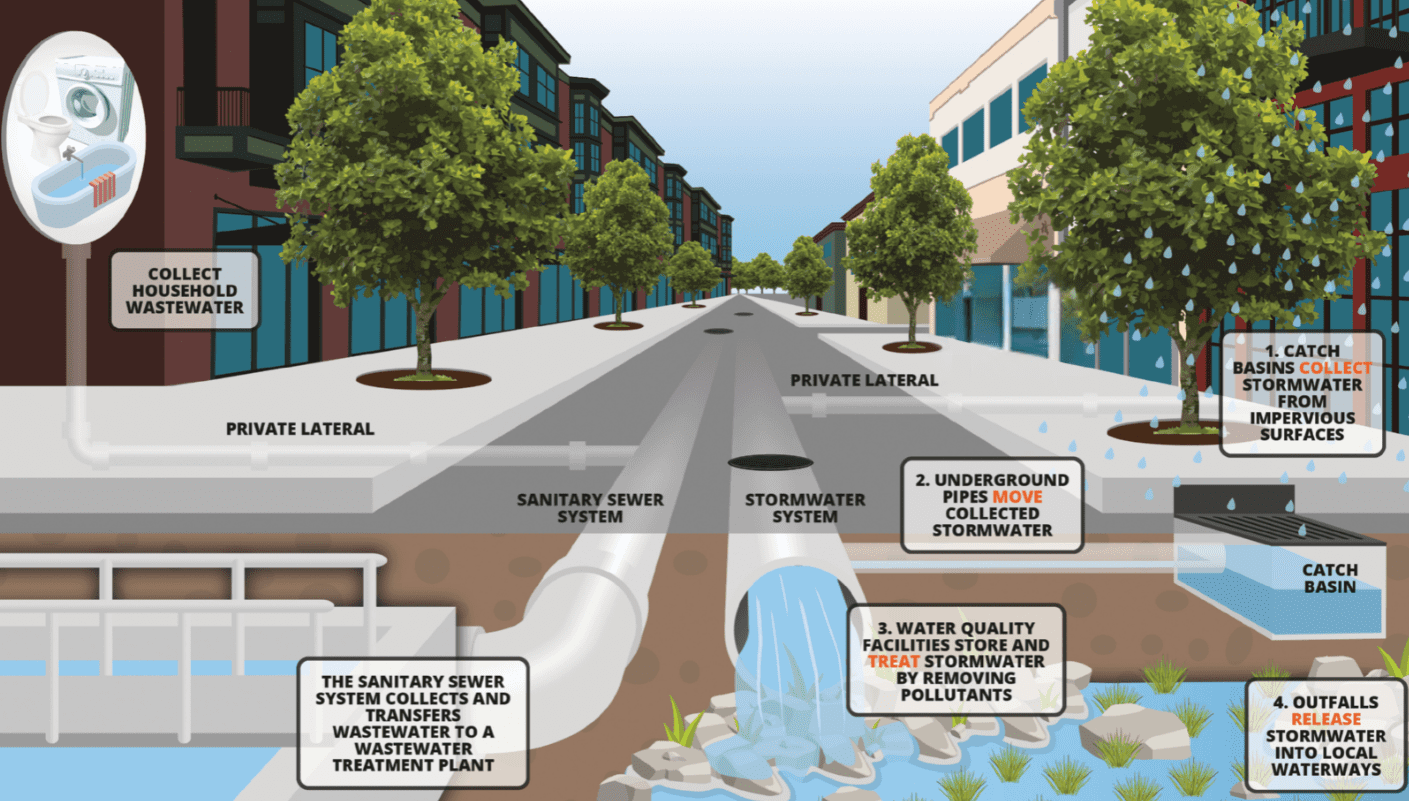
After this water goes down a drain, it enters the sanitary sewer system — a network of pipes that carries it to a wastewater treatment plant. At the plant, wastewater goes through multiple treatment steps to remove solids, organic matter, bacteria, and other contaminants so it can be safely returned to rivers, lakes, or groundwater.
Nebraska has strict regulations about wastewater — it must be treated and cannot be discharged untreated to land, water, or used improperly.
What Is Stormwater?
Stormwater, on the other hand, is simply water outside, from rain or melting snow that doesn’t soak into the ground. Instead, it flows over rooftops, driveways, streets, and other hard surfaces into a separate conveyance system made up of:
-
Storm drains
-
Curb inlets
-
Pipes
-
Ditches
-
Channels
Unlike wastewater, stormwater does not go to a treatment plant. Most of the time it flows directly from the storm drain into nearby waterways — untreated. That’s why stormwater can carry pollutants like sediment, oil, pet waste, fertilizers, pesticides, and trash straight into rivers and lakes.
In Nebraska and many other states, communities with municipal separate storm sewer systems (MS4s) are permitted under state and federal regulations to help prevent polluted runoff, but the water still doesn’t go through a wastewater‑style treatment process.
Why the Difference Matters
So why are stormwater and wastewater handled separately?
Volume and variability
Stormwater can vary dramatically — a heavy rain can double or triple the amount of water moving through a storm system in a very short time. Treating all of that water like wastewater would require enormous infrastructure – large property, extensive technology, huge cost, but only intermittent use – that most cities can’t justify.
Different management goals
-
Wastewater systems focus on cleaning water that has been contaminated by human use before it re‑enters the environment.
-
Stormwater systems focus on moving large volumes of water quickly to prevent flooding and erosion, then working with communities to reduce pollution at the source before it enters waterways.

How You Can Help
Even though stormwater isn’t treated, everyday choices can reduce the pollutants it carries:
-
Sweep your driveway — dispose of debris in the trash, don’t hose it into the street
-
Pick up pet waste promptly
-
Use fertilizers and pesticides sparingly, especially before rain
-
Properly maintain vehicles to prevent leaks
-
Install rain gardens or native plant buffers to help soak up runoff
Each of these actions keeps more pollutants out of stormwater, which helps protect rivers, lakes, and drinking water sources downstream.