
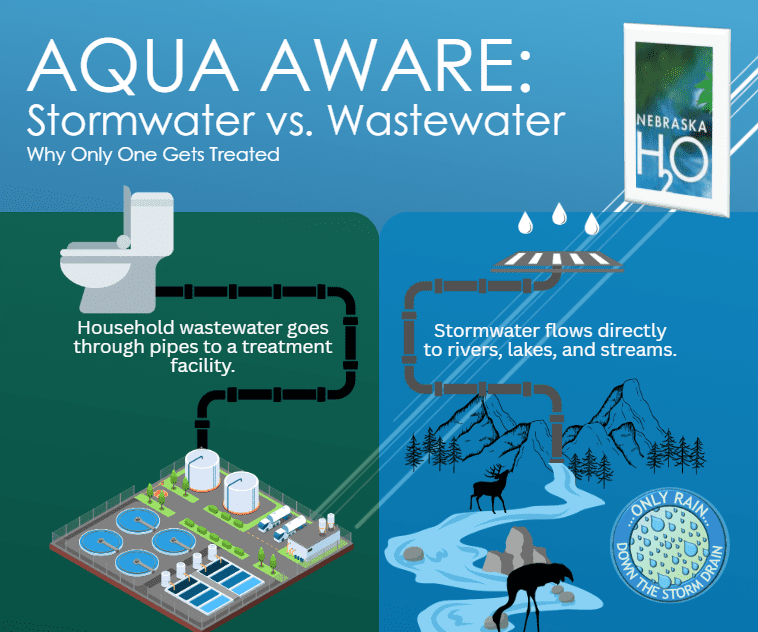
Most drains feel the same in daily life. Water goes in, disappears, and you don’t think much about it after that. But what happens next depends entirely on which drain you’re using.
Stormwater and wastewater don’t share a system. They don’t get the same handling. Only one of them gets treated before it returns to rivers or groundwater.
That difference drives a lot of what shows up in local waterways.
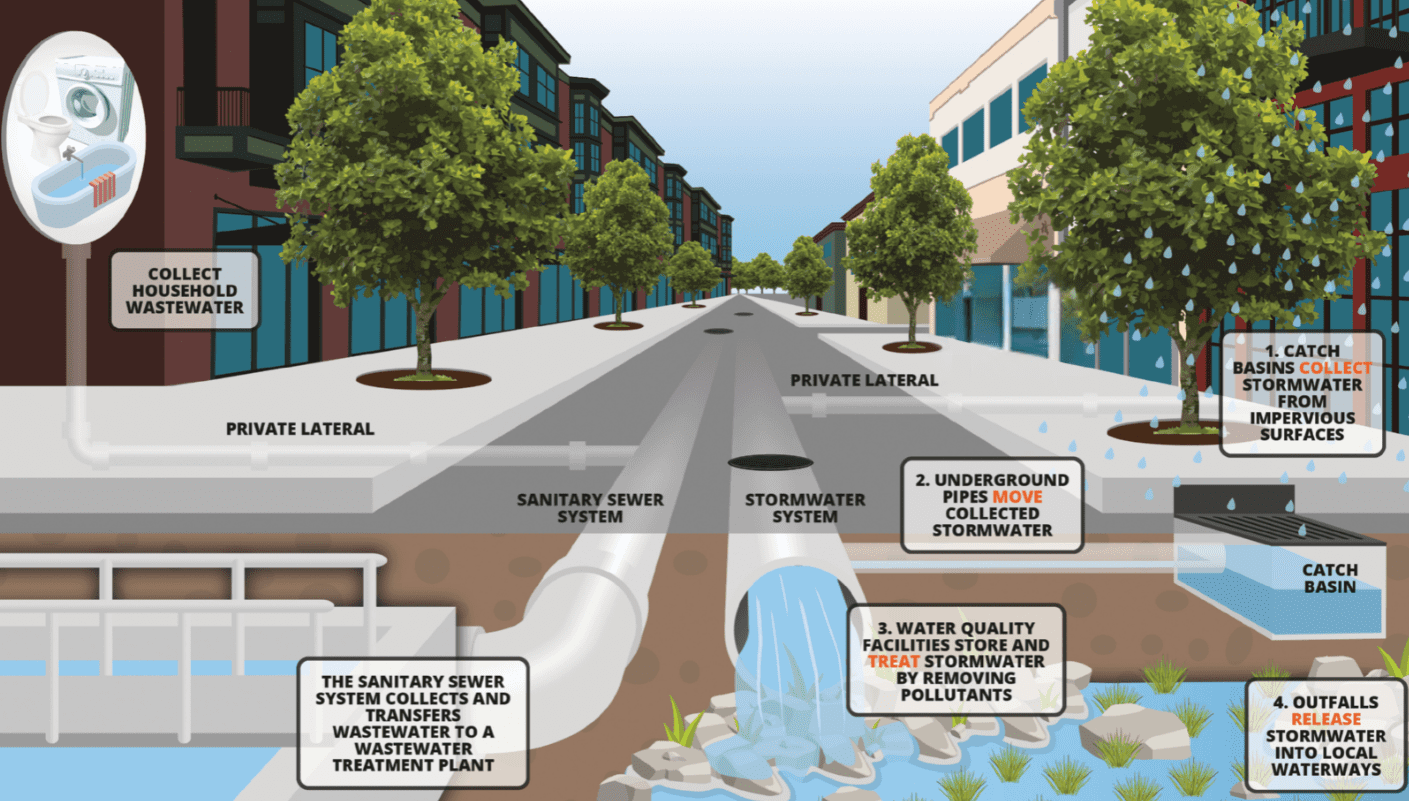

What is Wastewater?
Wastewater is what comes from inside buildings. Sinks, showers, toilets, laundry, dishwashers, industrial processes. Anything that’s been used inside a home or business.
Once it goes down the drain, it enters the sanitary sewer system. From there it travels through underground pipes to a treatment plant, where it’s cleaned through a series of physical, biological, and chemical processes. Solids are removed. Bacteria are reduced. Organic material is broken down. What leaves the plant is regulated before it goes back into the environment.
That system is designed specifically for dirty water.
What is Stormwater?
Stormwater is different.
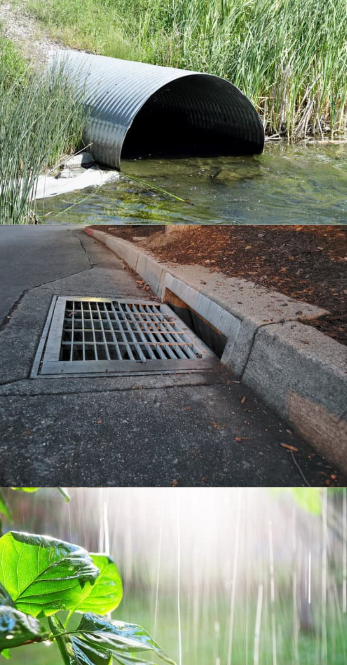
It starts outside. Rain, melting snow. Water that hits roofs, streets, driveways, parking lots, and lawns and doesn’t soak in. From there it moves across the surface and into storm drains, curb inlets, ditches, and channels.
Then it keeps going.
Most stormwater does not get treated. It flows directly to local creeks, ponds, lakes, and rivers. Whatever it picked up along the way goes with it—sediment, oil, pet waste, fertilizer, litter.
In communities with municipal separate storm sewer systems (MS4s), there are rules meant to reduce pollution before it reaches those drains. But the system itself is still built for conveyance, not treatment.
So why split them in the first place?
Start with scale. A summer thunderstorm can send a massive surge of water into the system in a short amount of time. Treating that volume like wastewater would require treatment plants sized for peak storms, not average days. Most of that capacity would sit unused most of the year, then get overwhelmed when it’s actually needed.
Stormwater systems are built for speed and capacity. Get water off streets. Reduce flooding. Move it downstream.
Wastewater systems are built for cleaning. Smaller, steady flows. More time, more control, more treatment steps.
Two different jobs.

The separation matters because what happens on the ground doesn’t stay there.
A parking lot leak, pet waste left in a yard, fertilizer before a storm, debris swept into a gutter—all of it can end up in a river without ever passing through a treatment plant.
That’s where everyday choices come in.
-
- Pick up pet waste.
- Keep leaves and trash out of streets and drains.
- Use lawn chemicals carefully and avoid applying before rain.
- Fix vehicle leaks when they show up.
- Let runoff soak into grass or planted areas instead of sending it straight to pavement.
None of it is complicated. It just has to happen before the rain starts moving things around.
Stormwater and wastewater may look similar at the drain, but they take very different paths afterward. One is cleaned. One isn’t.
What goes in at the surface is often what shows up downstream.
Our Water, Our Responsibility.