
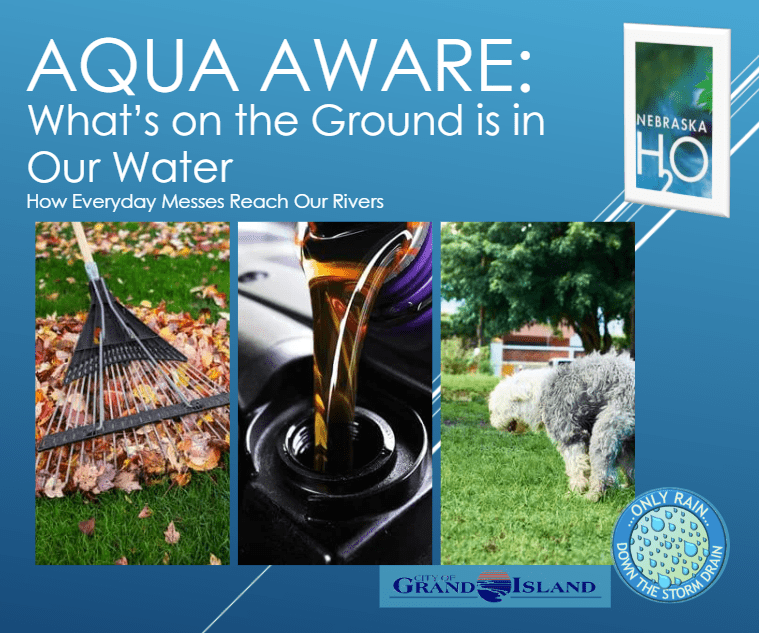
Every rainstorm, snowmelt, or shower sends water rushing across our streets and yards. Most people assume that this water just disappears — but in reality, where it goes and what it carries matters a lot. Stormwater is nature’s delivery system: it collects runoff from surfaces like roofs, driveways, parking lots, and lawns, and carries it into nearby storm drains and waterbodies without any treatment. That means anything on the ground can end up in our rivers, streams, or lakes.
Stormwater Doesn’t Go to a Treatment Plant
Unlike wastewater from your toilet or sink, which is sent to a wastewater treatment plant, stormwater flows directly into local waters. Storm drains are designed to prevent flooding, not clean the water. So anything that’s on the ground when it rains — whether it’s natural debris or human-made messes — gets picked up and transported downstream.
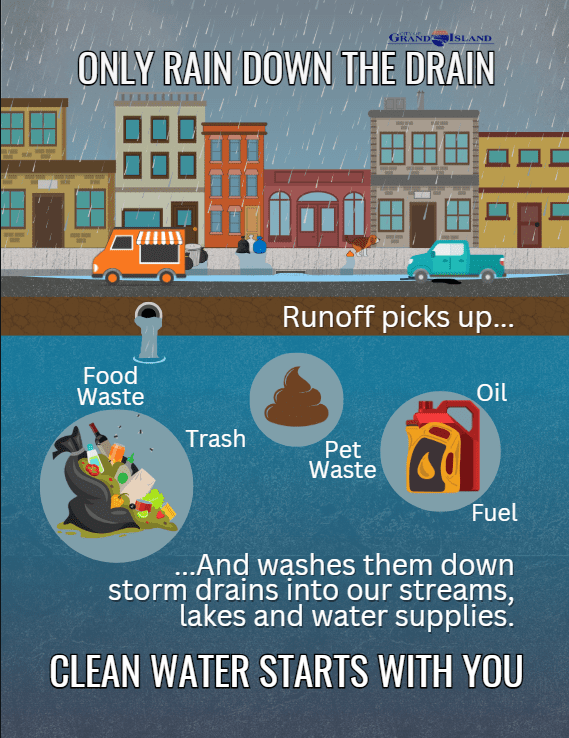
What Carries Pollutants Into Our Water
Stormwater runoff becomes polluted runoff when it interacts with things we often overlook in our daily lives:
-
Litter & Trash
Paper, plastic, cigarette butts, and wrappers may seem small, but they wash straight into waterways — and plastics can take decades or longer to break down, harming wildlife along the way. -
Pet and Yard Waste
Pet waste contains harmful bacteria and nutrients that contribute to poor water quality if left on lawns, sidewalks, or streets. Yard debris like grass clippings or leaves can also add excess nutrients and clog storm drains. -
Automotive Fluids
Oil, antifreeze, brake fluid, and other automotive chemicals drip from cars and accumulate on parking lots and roads. When rain washes these fluids away, they enter streams and pose risks to aquatic life. -
Fertilizers and Pesticides
Lawn and garden care products are helpful for plants — but when applied in excess or just before rainstorms, the chemicals can wash into storm drains and contribute to nutrient pollution downstream. -
Sediment and Dirt
Soil and sand from construction sites, bare ground, or eroded areas can make water muddy and suffocate fish and insects that need clean habitat.
Why Small Messes Add Up
One rainstorm can pick up pollutants from every impervious surface in town — roofs, parking lots, sidewalks, and streets — and carry them into the nearest waterway. Because this type of pollution doesn’t come from a single pipe (like an industrial discharge), it’s known as nonpoint source pollution and is one of the leading causes of degraded rivers and lakes in the U.S.

What You Can Do
The good news is that lots of simple, everyday behaviors can cut down on polluted stormwater:
-
Pick up pet waste and dispose of it properly.
-
Keep gutters and storm drains clear of yard debris.
-
Sweep driveways and sidewalks instead of hosing them off into the street.
-
Use fertilizers and pesticides sparingly and avoid applying them before forecasted storms.
-
Recycle used oil and take hazardous household waste to designated collection sites.
Every action helps because stormwater connects us all with our local waterways.
Learn More
-
EPA – Urbanization and Stormwater Runoff: Explains how stormwater becomes polluted and why runoff matters
-
EPA – Stormwater Sources and Solutions: Details common stormwater pollutants and how runoff picks them up
-
EPA – What Is Stormwater Pollution? (public education PDF) — a stormwater basics pamphlet