
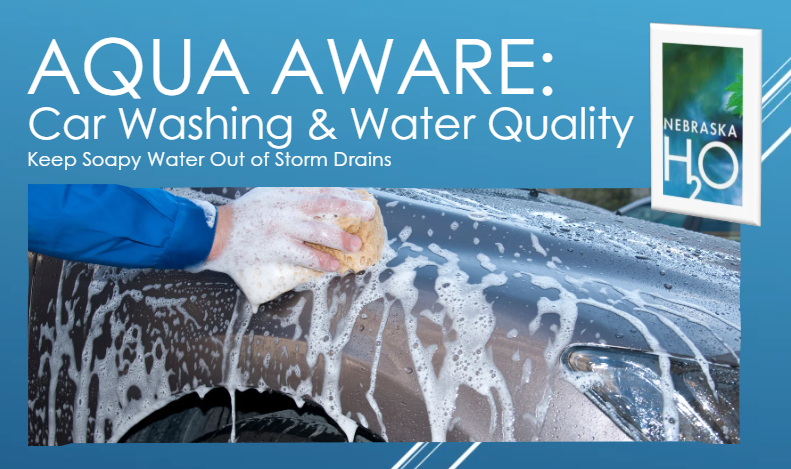
Washing your car is a regular part of vehicle maintenance, but have you ever wondered where all that soapy water goes?
If you wash your car in your driveway or on the street, the water often flows into a nearby storm drain. Unlike water from sinks, showers, and toilets, stormwater is not treated before it reaches local streams, lakes, and rivers. That means everything washed off your vehicle may end up in Nebraska’s waterways.
Fortunately, a few simple changes can help protect water quality while keeping your vehicle clean.
What washes off your car?
When you wash your vehicle, you’re removing more than dust.
Wash water can carry:
-
- Dirt and sediment
- Motor oil and grease
- Brake dust
- Tire particles
- Heavy metals
- Road salt
- Soap and cleaning products
These pollutants collect on your vehicle during everyday driving. Once they’re rinsed away, they can be carried by stormwater into nearby waterways.
Why does it matter?
Storm drains are designed to prevent flooding. They do this by moving rainwater away from streets as quickly as possible. In most communities, they do not lead to a wastewater treatment plant.
When soapy wash water enters a storm drain, it may carry pollutants directly to streams or rivers where they can affect aquatic life and water quality.
Even soaps labeled “biodegradable” are meant to break down in soil or wastewater treatment systems—not in storm drains or natural waterways.
Better ways to wash your car
You don’t have to stop washing your car at home. You can choose practices that help keep polluted water out of storm drains:
Sweep first
If your driveway has leaves, grass clippings, or other debris, sweep them up before washing. This helps keep additional pollutants out of storm drains.
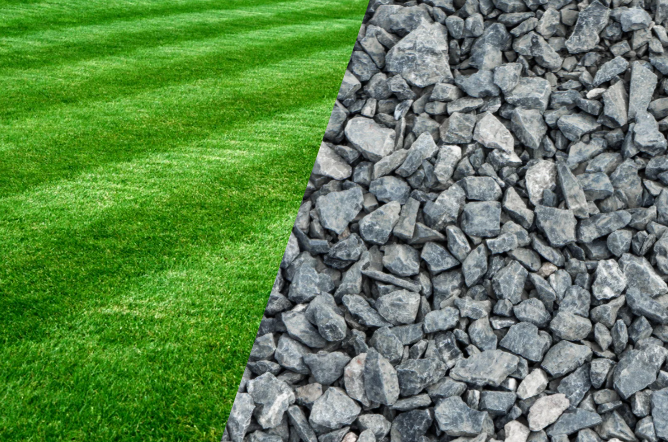
Wash your car on the lawn or gravel
Whenever possible, wash your vehicle on grass, gravel, or another surface that allows water to soak into the ground. The soil helps filter pollutants before they reach waterways.
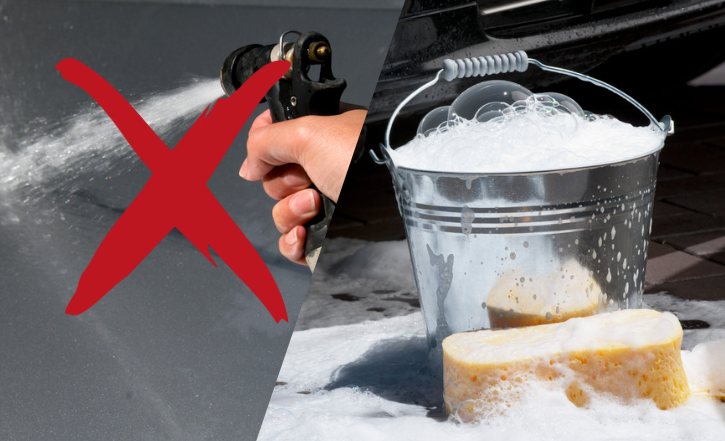
Use a bucket instead of a constantly running hose
Using a bucket with a spray nozzle helps reduce water use while still getting your vehicle clean.
Use soap sparingly
Only use the amount of car wash soap needed for the job. More soap doesn’t mean a cleaner vehicle—it increases the amount of soap running down your driveway.
Consider a commercial car wash
Many commercial car washes send their wash water to the sanitary sewer system, where it can be treated before being released back into the environment. Some facilities also recycle a portion of the water they use.
What about engine cleaning?
Avoid washing engines or heavily greasy vehicle parts where the runoff can reach a storm drain. Oil, grease, and cleaning chemicals, even in small amounts, can pollute waterways.
If your vehicle has a fluid leak, repair it as soon as possible. Fixing leaks not only protects water quality but also helps keep your vehicle running safely.
Small actions make a big difference
Every time it rains, stormwater carries whatever is left on our streets and driveways toward local waterways. By washing your car responsibly, you can help reduce pollution before it reaches a storm drain.
Clean cars and clean water can go hand in hand.
Our Water, Our Responsibility
Looking for more ways to protect water quality?
Visit Prevent Pollution Around Your Home to explore other everyday actions that help reduce stormwater pollution.