
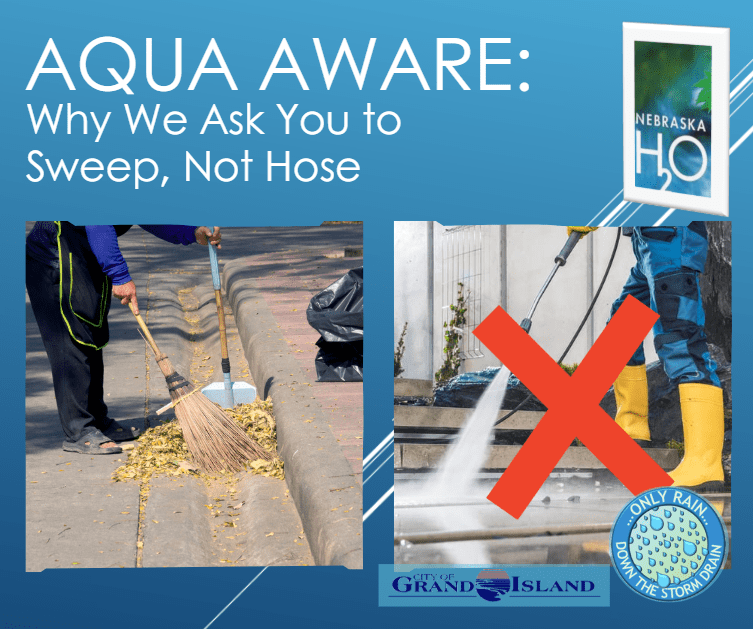

It’s a common habit: after mowing, raking, or cleaning your driveway, you grab the hose and wash everything down into the street. It seems harmless — after all, water is good, right?
Not quite. In our community, using a broom instead of reaching for the hose can make a big difference for water quality, stormwater infrastructure, and even flood prevention.
How Hosing Can Harm Water and Infrastructure
When you hose clippings, dirt, or debris into the street:
Pollutants Enter Stormwater Systems
Leaves, grass, soil, pet waste, and chemicals get washed into storm drains, flowing untreated into local lakes, streams, and ultimately the Platte River. Because these waterways are connected to local groundwater, pollutants can spread farther than you might expect.
Dirt and Debris Accumulate in Pipes and Ditches
Sediment and organic material gradually fill stormwater pipes, culverts, and ditches. This reduces the system’s capacity to carry water, leading to more frequent localized flooding during heavy rains. The buildup also increases maintenance costs for the city and can impact water quality when debris breaks free during storms.
Why Sweeping Works Better
Sweeping removes debris before it reaches storm drains, keeping pollutants out of waterways and stormwater pipes clear. It also gives residents a chance to:
-
Collect yard waste for mulching, composting, or curbside disposal
-
Prevent soil from washing into rivers and lakes
-
Protect aquatic life from nutrient overload and sedimentation
Even a small effort — sweeping your driveway or sidewalk after mowing — adds up when the whole community participates.
- Actionable Tips for Residents
-
Sweep instead of hosing: Make it a habit to sweep leaves, grass, dirt, and other debris back into your yard or into a compost/yard waste container.
-
Check storm drains: If you notice leaves or debris near storm drains, sweep them away before the next rainfall.
- Maintain a grassy buffer zone: Keep dirt, mulch, and other loose materials away from streets and storm drains.
- Actionable Tips for Businesses
-
Sweep instead of hosing: Sweep sidewalks and parking lots regularly.
-
Read the label: Avoid using liquid industrial cleaners outside.
-
Clean up spills quickly: Use kitty litter to soak up liquid spills, then sweep it up and dispose of it into the trash. Never wash spills directly into streets or gutters.
By following these simple steps, residents and businesses help prevent flooding, reduce pollution in local waterways, and keep our stormwater infrastructure functioning properly.