
Stormwater Pollution SourcesUnderstanding What Pollutes Our Waterways
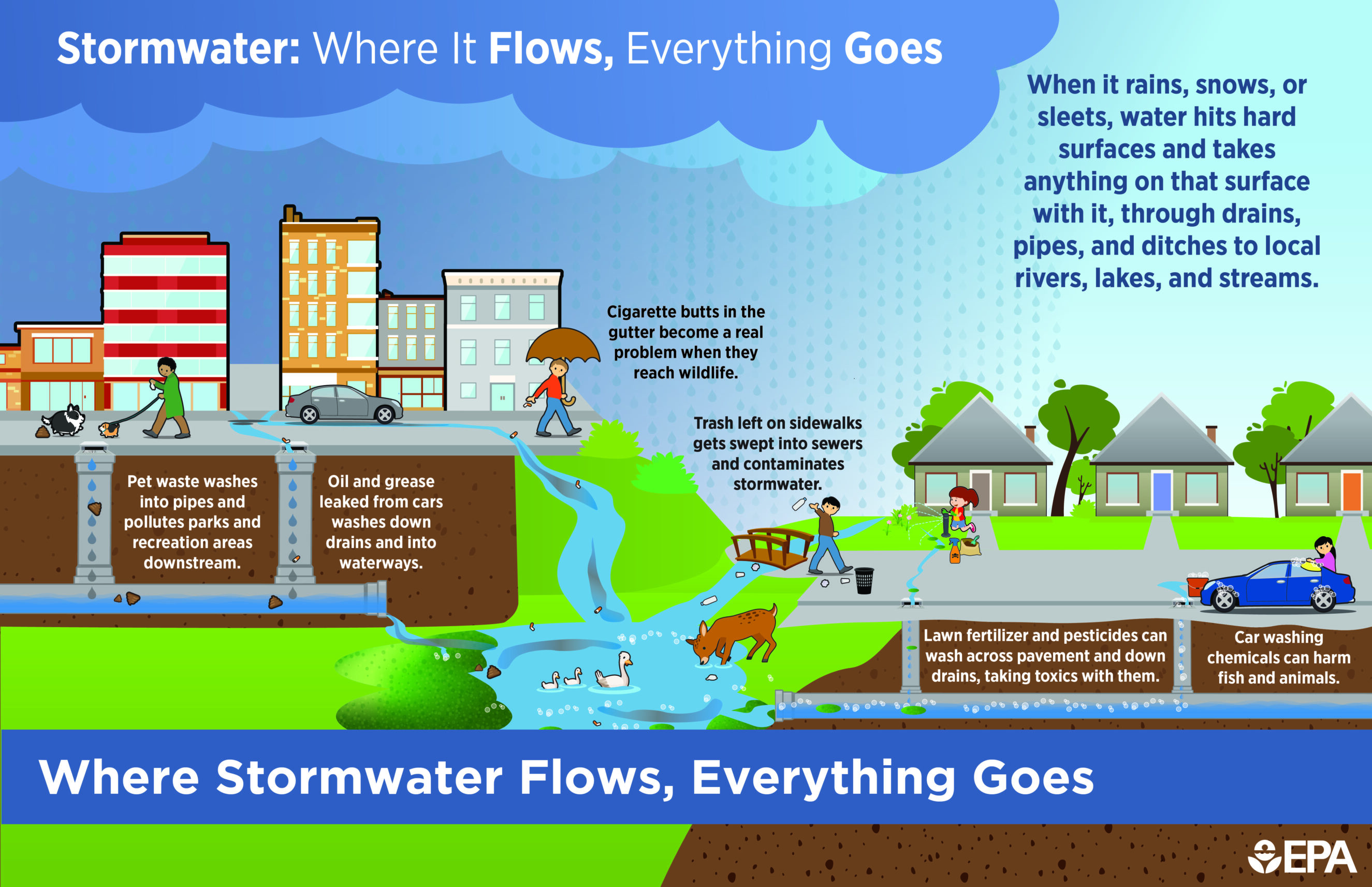
Many people think of pollution as something that comes from a factory pipe or a major spill. While those sources can impact water quality, much of the pollution affecting local waterways comes from everyday activities in our neighborhoods, businesses, parks, and communities.
When rain falls or snow melts, runoff moves across rooftops, streets, driveways, parking lots, and lawns. Along the way, it can pick up pollutants and carry them into storm drains, ditches, streams, rivers, and lakes.
Understanding where stormwater pollution comes from is the first step toward preventing it.
What Is Stormwater Pollution?
Stormwater pollution occurs when rainfall or snowmelt picks up pollutants and transports them into local waterways.
Unlike wastewater, stormwater is generally not treated before it enters streams, rivers, lakes, or wetlands. Because of this, anything left on the ground has the potential to become a water quality concern.
Common stormwater pollutants come from many everyday sources, including soil, yard waste, pet waste, fertilizers, vehicle fluids, chemicals, litter, and winter materials.
Many of these pollutants originate from ordinary activities that occur every day.
Point Source vs. Non-Point Source Pollution
Water pollution is often grouped into two categories: point source pollution and nonpoint source pollution.
Point Source Pollution
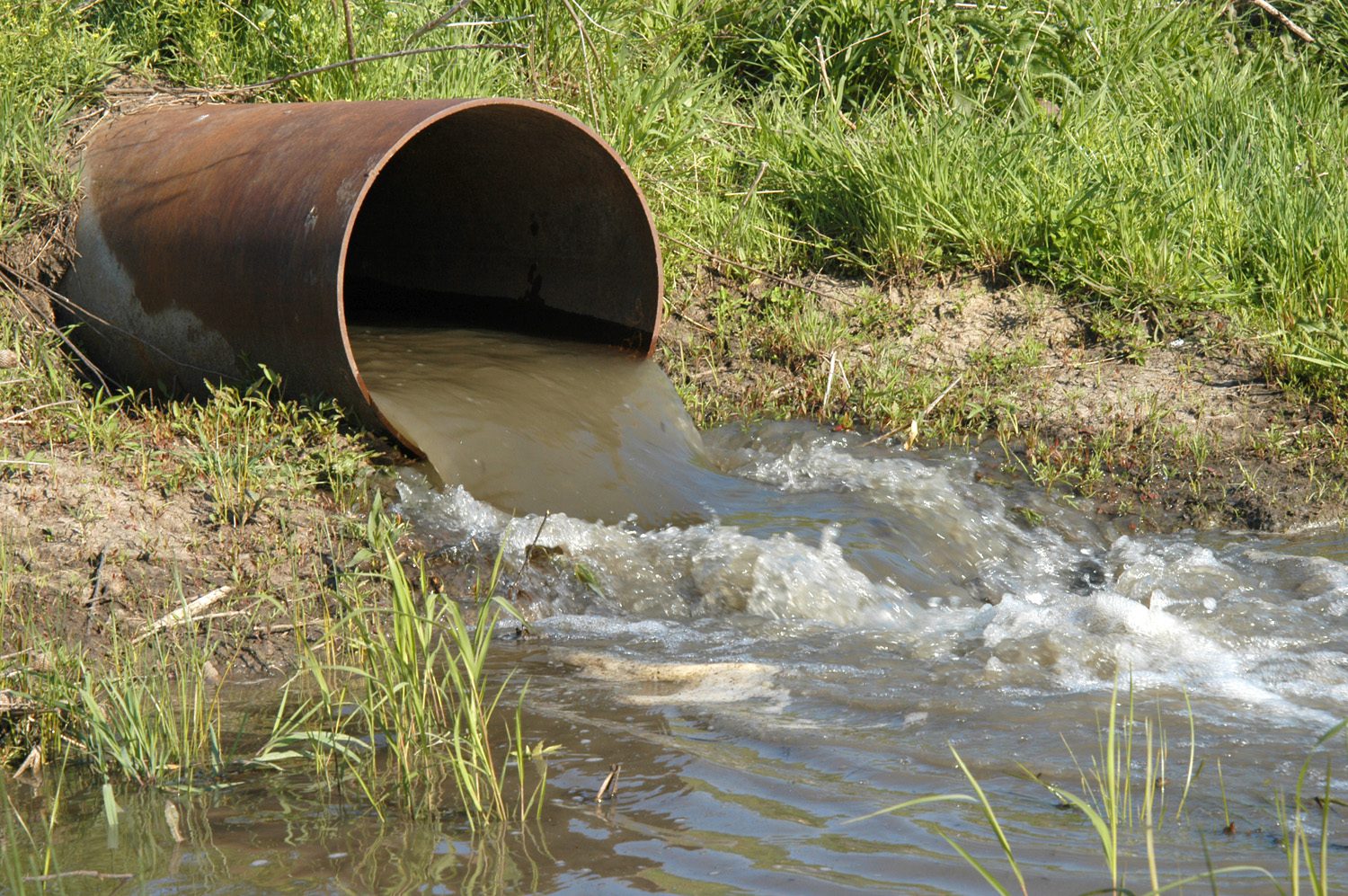
Pollution from a single, identifiable location, such as an industrial discharge pipe or wastewater treatment facility outfall.
Because the source can be identified, these discharges are often easier to monitor and regulate.
Non-Point Source Pollution
Nonpoint source pollution comes from many small sources spread across a landscape.
Examples include:
- Fertilizer washed from lawns
- Pet waste left on the ground
- Oil dripped from vehicles
- Leaves and grass clippings in streets
- Trash carried by runoff
Nonpoint source pollution is challenging because it comes from many everyday activities.
Dirt and Sediment
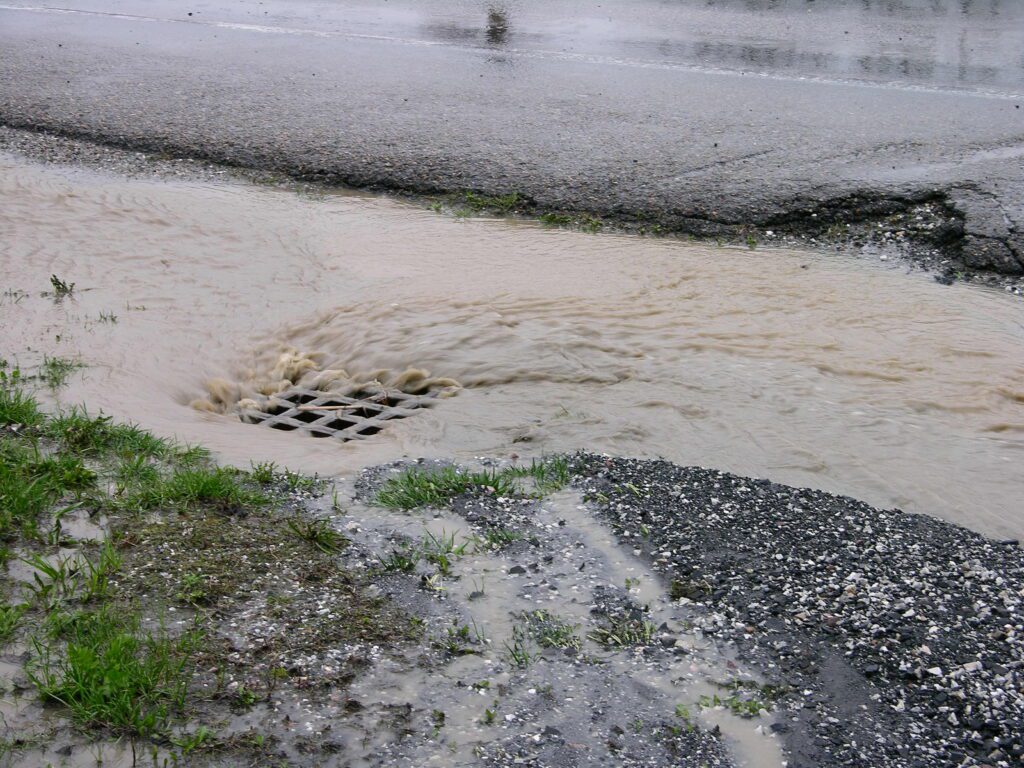
Soil belongs on the land, not in waterways. When rain carries soil away, sediment can cloud water, harm aquatic habitat, and transport other pollutants.
Pet Waste
Pet waste contains bacteria and nutrients that can wash into waterways during rainfall.
Related Resources
Fertilizers and Pesticides
Excess nutrients and chemicals can wash from lawns and gardens into waterways. Applying only what plants need helps reduce runoff.
Related Resources
Leaves and Grass Clippings
Natural materials can still become pollutants when they accumulate in streets or near storm drains. As they break down, they release nutrients that can affect water quality.
Trash and Litter
Trash left outdoors can easily become stormwater pollution.
Plastic bottles, food wrappers, cigarette butts, fireworks debris, and other litter can be carried by runoff into waterways. Once there, these materials may persist for years and can harm wildlife and aquatic habitats.
Proper disposal of trash and participation in cleanup efforts help reduce litter pollution.
Vehicle Fluids
Vehicles can leak oil, antifreeze, transmission fluid, brake fluid, and other chemicals onto streets and driveways.
Even small leaks can accumulate over time. During rainfall, these pollutants may be carried into storm drains and nearby waterways.
Routine vehicle maintenance helps prevent leaks and protects water quality.
Household Chemicals
Many common household products can become pollutants if disposed of improperly.
Examples include:
- Paints
- Solvents
- Cleaning products
- Automotive chemicals
- Pool chemicals
These materials should never be dumped into storm drains, ditches, gutters, or waterways.
Always follow local disposal guidelines and use household hazardous waste collection programs when available.
Related Resources
Winter Pollution
Stormwater pollution is not limited to warm weather.
During winter, snowmelt can carry road salt, deicers, sand, and other materials into stormwater systems and waterways.
These products help improve safety during icy conditions, but applying more than necessary can increase environmental impacts.
Using products carefully and according to label directions helps balance safety and water quality protection.
How Pollution Reaches Waterways
Stormwater acts as a transportation system for pollutants. Because runoff is not treated before entering waterways, preventing pollution at the source is one of the most effective ways to protect water quality.
Learn more about stormwater and where it goes: Stormwater 101
What Residents Can Do
Everyone can play a role in protecting local waterways.
Simple actions include:
✓ Pick up pet waste
✓ Keep leaves and grass clippings out of streets
✓ Use fertilizers carefully
✓ Properly dispose of household chemicals
✓ Maintain vehicles to prevent leaks
✓ Secure trash and recycling containers
✓ Follow product label directions
✓ Avoid dumping anything into storm drains
Frequently Asked Questions
Why is dirt considered pollution?
While soil belongs on the land, it can become a pollutant when it is washed into waterways. Excess sediment can reduce water quality, harm aquatic habitat, and carry nutrients and other pollutants into streams, rivers, and lakes.
Is pet waste really considered pollution?
Yes. Pet waste contains bacteria and nutrients that can affect water quality when carried into waterways by runoff.
Why are leaves and grass clippings considered pollutants?
As they break down, they release nutrients that can contribute to water quality problems and algae growth.
Can stormwater carry oil and gasoline?
Yes. Vehicle fluids deposited on streets and driveways can be transported by runoff during rainfall.
Are fertilizers harmful to waterways?
When applied improperly or in excess, fertilizers can contribute nutrients that affect water quality.
Does road salt impact water quality?
Road salt and deicing products can enter waterways through snowmelt and runoff, which is why careful application is important.
What is the most important thing I can do to reduce stormwater pollution?
Prevent pollutants from being left where rainfall can wash them into storm drains and waterways.
Common Sources of Pollution
Explore the everyday activities and materials that affect stormwater quality — and learn how simple changes can help protect local waterways.
Continue Learning
Stormwater pollution is closely connected to flooding, infrastructure, and how communities manage runoff. Explore these related topics to learn how stormwater systems work, how flooding occurs, and how green infrastructure and homeowner practices help protect water quality.