
Understanding MS4 ProgramsHow Communities Manage Stormwater
Every community depends on a network of storm drains, pipes, channels, and natural areas to manage rain and snowmelt. But protecting water quality takes more than moving water away from streets—it requires preventing pollution before it reaches local waterways.
Communities across Nebraska work year-round to reduce stormwater pollution, improve local waterways, and meet environmental requirements designed to protect public resources.
Many of these efforts are carried out through Municipal Separate Storm Sewer System programs, commonly known as MS4 programs.
While most residents may never hear the term “MS4,” the work performed through these programs helps protect rivers, streams, lakes, wetlands, and groundwater throughout Nebraska.
What Does MS4 Stand For?
Municipal
A public entity, such as a city or county, owns or operates the system.
Separate
Stormwater and wastewater travel through different systems.
Storm Sewer
The system collects and moves rainfall and snowmelt runoff.
System
The network includes drains, pipes, ditches, ponds, and other stormwater infrastructure.
What is an MS4?
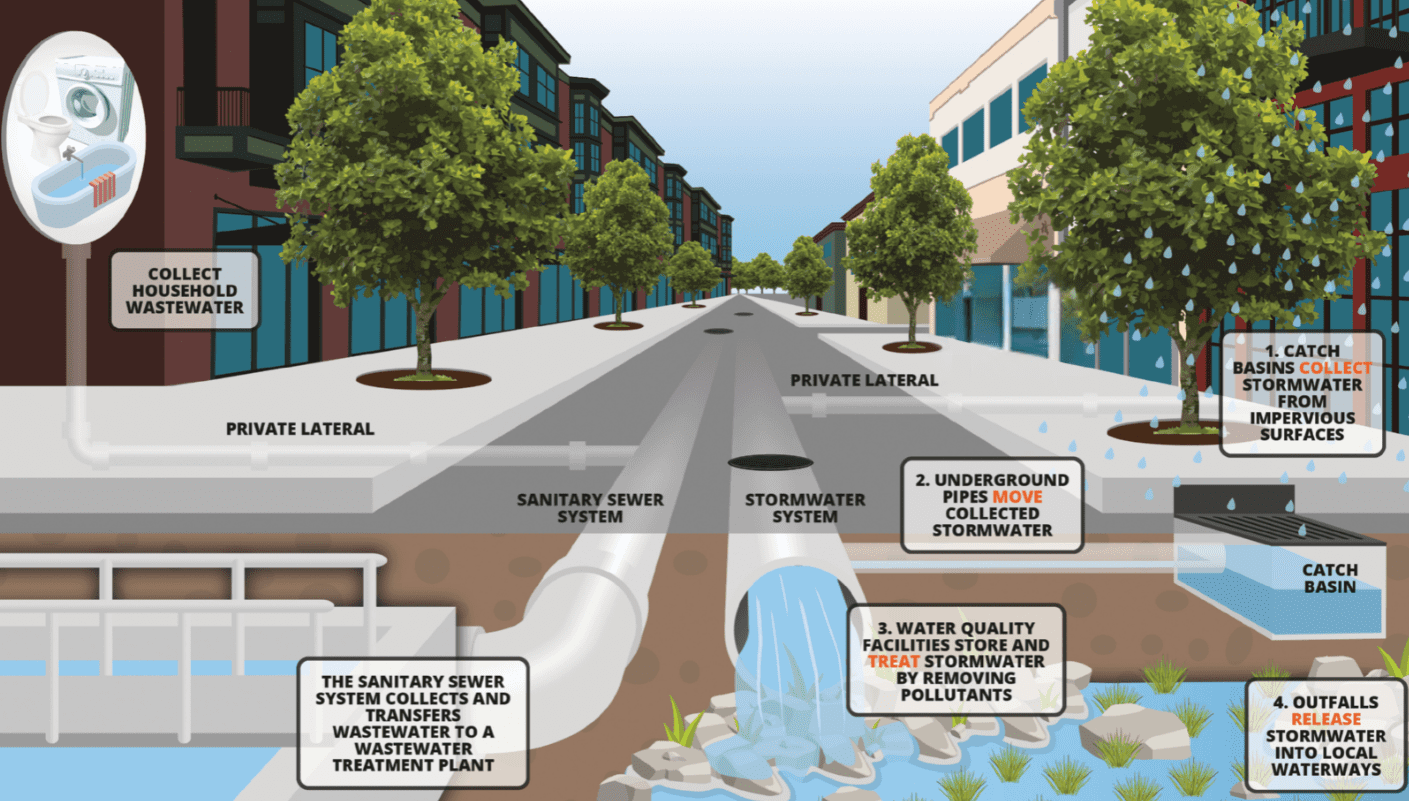
An MS4 is a system of streets, storm drains, pipes, ditches, channels, ponds, and other infrastructure used to collect and convey stormwater runoff. An MS4 does not mean one pipe or one facility. It is the entire network that moves stormwater through a community.
The word separate is important because stormwater systems are different from sanitary sewer systems.
Stormwater systems are designed to carry rainwater and snowmelt runoff. Sanitary sewer systems carry wastewater from homes, businesses, and industries to treatment facilities.
Because stormwater is typically discharged to local waterways, protecting stormwater quality is an important part of protecting water resources.
Stormwater vs. Wastewater
One of the most common misconceptions is that all water entering a drain receives treatment.
In reality, stormwater and wastewater are usually managed by separate systems.
Wastewater from sinks, showers, toilets, and businesses is typically conveyed to a treatment facility before being discharged.
Stormwater runoff often flows directly to local waterways through the storm drainage system.
Because stormwater is generally not treated before discharge, preventing pollution from entering runoff is extremely important.
Why Are MS4 Programs Required?
Stormwater runoff can carry soil, nutrients, bacteria, trash, oil, chemicals, and other pollutants into local waterways.
To help address these impacts, communities across the country and across Nebraska implement stormwater management programs designed to reduce pollution and protect water quality.
MS4 programs provide a framework for communities to identify problems, educate the public, improve practices, and implement long-term solutions.
These efforts help support cleaner waterways, healthier ecosystems, and more resilient communities.
How Communities Protect Water Quality
MS4 programs include a variety of activities that work together to improve stormwater quality.
Educating the Community
Education helps residents, businesses, and visitors understand how everyday activities affect stormwater quality.
Topics often include:
- Pet waste
- Lawn care
- Household chemicals
- Storm drain protection
- Water conservation
- Pollution prevention
Public education empowers individuals to take actions that protect local waterways.
Community involvement is an important part of successful stormwater programs.
Many communities encourage participation through:
- Volunteer events
- Stream cleanups
- Educational activities
- Public meetings
- Community partnerships
These efforts help build awareness and support for water quality initiatives.
Preventing Pollution
An illicit discharge is anything entering the storm drainage system that should not be there.
Examples may include:
- Improper wastewater connections
- Dumping of chemicals
- Vehicle fluids
- Wash water
- Other non-stormwater discharges
Communities work to identify and eliminate these discharges before they impact waterways.
Managing Construction Runoff
Construction activities can expose soil to erosion during rainfall.
Stormwater programs help ensure that erosion and sediment controls are used to reduce impacts to nearby waterways.
Examples include:
- Silt fences
- Stabilized construction entrances
- Sediment basins
- Temporary vegetation
These practices help keep soil on the construction site and out of streams and lakes.
Planning for New Development
Stormwater management continues after construction is complete.
Communities may require practices that help manage runoff from new development and redevelopment projects.
Examples include:
These practices help protect water quality and reduce runoff impacts over the long term.
Improving Municipal Practices
Communities also evaluate their own operations to reduce stormwater pollution.
Examples may include:
- Street sweeping
- Facility inspections
- Proper material storage
- Employee training
- Stormwater infrastructure maintenance
These activities help reduce pollution from municipal operations.
Who Is Responsible for Stormwater?
Stormwater management works because many people share responsibility. Communities maintain infrastructure and implement stormwater programs. Developers manage runoff from construction and new development. Residents help by preventing pollution and managing water on their own properties.
Common Stormwater Misconceptions
"Storm drains connect to wastewater treatment plants."
In most communities, stormwater and wastewater systems are separate.
"Rainwater is always clean."
As stormwater flows across developed areas, it can pick up pollutants before reaching waterways.
"A little pollution doesn't matter."
Many small sources of pollution can combine to create significant water quality impacts.
"Only cities affect water quality."
Everyone plays a role in protecting water resources, including residents, businesses, industries, schools, and community organizations.
How Residents Can Help
Protecting water quality is a shared responsibility.
Residents can help by:
✓ Picking up pet waste
✓ Learning how water moves across your property
✓ Keeping leaves and grass clippings out of streets
✓ Properly disposing of household chemicals
✓ Maintaining vehicles to prevent leaks
✓ Reporting suspicious discharges
✓ Supporting local stormwater initiatives
Small actions across a community can have a meaningful impact.
Frequently Asked Questions
Are storm drains connected to the sanitary sewer?
No. In most communities, stormwater systems and sanitary sewer systems are separate.
Is stormwater treated?
No. Stormwater is not treated before being discharged to local waterways.
Why are construction sites regulated?
Construction sites can generate sediment and erosion that may impact nearby waterways if not properly managed.
What is an illicit discharge?
An illicit discharge is any non-stormwater discharge entering the storm drainage system that is not allowed.
Why do communities spend money on stormwater programs?
Stormwater programs help protect water quality, support regulatory requirements, reduce pollution, and improve community resilience.
How can I learn more about stormwater in my community?
Contact your local stormwater program or explore the educational resources available through Nebraska H2O.
How Stormwater is Managed
Stormwater in Nebraska is managed through a regulated system designed to reduce flooding, protect water quality, and meet federal requirements. These articles explain how storm drains are maintained, who is responsible for stormwater infrastructure, and why MS4 regulations exist to help protect local waterways.
Continue Learning
Stormwater management connects infrastructure, flooding, pollution prevention, and community actions. Explore these related topics to learn how stormwater moves through the system, what causes water quality issues, and how residents can help reduce runoff and pollution.