
Every day, wastewater from sinks, showers, and toilets is collected, treated, cleaned, and safely returned to the environment.
Stormwater doesn’t get that second chance.
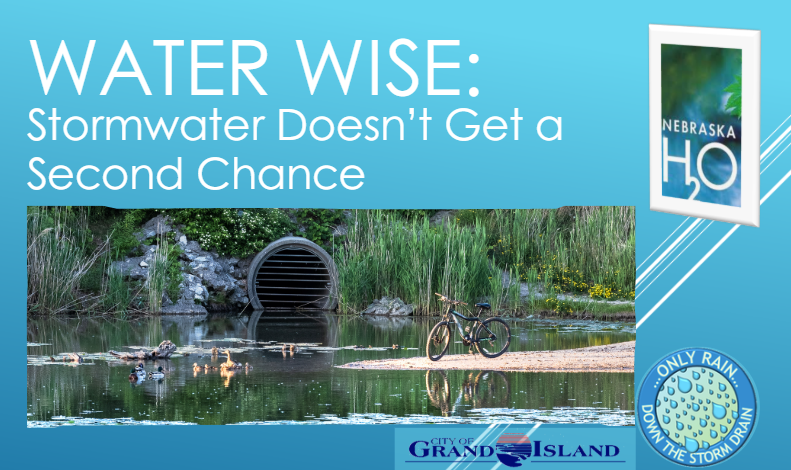
When rain falls on streets, parking lots, and driveways, it begins moving almost immediately. Along the way, it picks up whatever is left on the ground before flowing into a storm drain. From there, it typically travels through pipes, ditches, lakes, and creeks before eventually reaching the Platte River and connected groundwater systems.
For stormwater, there isn’t a treatment plant waiting downstream.
That’s why preventing pollution before it reaches a storm drain is so important.
Rainwater Doesn’t Stay Rainwater
Rain itself is relatively clean.
The moment it starts flowing across the ground, though, it begins collecting whatever it encounters.
That can include:
- Dirt and sediment
- Leaves and grass clippings
- Pet waste
- Fertilizer and pesticides
- Oil and vehicle fluids
- Trash and litter
One yard or one driveway may not seem like much. Across an entire community, those small sources add up every time it rains.
Why Prevention Matters
Because stormwater isn’t treated, there’s no opportunity to remove pollution after it enters the system.
Sediment settles in ponds and drainage channels, reducing the space available to store stormwater during future storms. Nutrients can fuel algae growth. Oil, bacteria, and other pollutants can affect the health of local waterways, wildlife, and downstream communities.
The easiest place to stop pollution isn’t at the end of the system.
It’s at the beginning.
So Why Are There Stormwater Rules?
Stormwater rules aren’t about controlling rain.
They’re about preventing people-made pollution from entering the water.
Federal law requires communities to reduce stormwater pollution through programs that focus on education, infrastructure maintenance, construction practices, and pollution prevention. You may hear these programs referred to as Municipal Separate Storm Sewer Systems, or MS4s.
The goal is straightforward: keep pollutants out of stormwater before they reach local waterways.
What Does That Look Like?
You may notice stormwater protection in places you pass every day.
Construction sites install erosion-control practices to keep soil from washing away.
Public Works crews inspect and maintain storm drains, ditches, and other drainage infrastructure.
Educational signs remind residents that storm drains lead directly to local waterways.
Community cleanup events remove litter before it can be carried away by the next rainstorm.
Each effort tackles the problem before pollution reaches the stormwater system.
Where Residents Make the Biggest Difference
The most effective stormwater protection happens long before water reaches a storm drain.
Every resident can help by:
-
- Sweeping driveways and sidewalks instead of hosing debris into the street.
- Picking up pet waste.
- Keeping leaves, grass clippings, and mulch out of gutters.
- Applying fertilizers and pesticides according to the label.
- Properly disposing of paint, oil, and household chemicals.
- Reporting illegal dumping or spills.
These simple actions keep pollutants where they belong instead of sending them downstream.
Why It Matters
Stormwater is one of the few parts of our water system that depends almost entirely on prevention.
Once rain enters a storm drain, there’s usually no treatment process to remove the pollution it carries.
That’s why protecting water quality starts long before the rain arrives.
Every pile of leaves kept out of the street, every patch of bare soil stabilized, every piece of litter picked up, and every storm drain kept clear helps protect the same connected system—from neighborhood streets to the Platte River and the groundwater beneath our feet.
Stormwater only gets one chance to stay clean.