

Every time it rains in Grand Island, thousands of gallons of water begin moving across the landscape. Some of it soaks into the ground. Some collects in ditches and lakes. Much of it flows through storm drains before eventually reaching the Platte River.
The path each raindrop takes depends on where it lands—and that journey affects flooding, water quality, and even our groundwater.
It All Starts with Rain
Rain that falls on grass, gardens, and other landscaped areas often soaks into the soil. This natural process, called infiltration, filters water and helps replenish the groundwater beneath our feet.
Rain falling on roofs, streets, driveways, and parking lots doesn’t have that opportunity. Instead, it runs across hard surfaces, carrying whatever is in its path.
That runoff can pick up:
- Dirt and sediment
- Leaves and grass clippings
- Fertilizers and pesticides
- Pet waste
- Oil and vehicle fluids
- Trash and litter
Everything washed into the storm drain system goes somewhere.
Where Do Storm Drains Lead?
One of the most common misconceptions is that storm drains connect to the wastewater treatment plant.
Grand Island has two separate systems. The sanitary sewer carries wastewater to the treatment plant. The storm sewer is designed to move rainwater away from streets and neighborhoods to reduce flooding.
Stormwater typically travels through:
- Storm drain inlets
- Underground storm sewer pipes
- Open channels and drainage ditches
- Stormwater lakes and ponds
Unlike wastewater, stormwater isn’t treated before it enters local waterways. Whatever flows into a storm drain can end up in a creek, lake, or river.
Through Grand Island’s Waterways
As stormwater moves through the city, it passes through a network of lakes, creeks, channels, and drainage corridors that slow the water and provide temporary storage during heavy rain.
Depending on where the rain falls, it may travel through places like:
- Eagle Scout Lake
- Pier Park
- L.E. Ray Lake
- Suck’s Lake
- Silver Creek
- Moore’s Creek
- Warm Slough
- Wood River
These waterways work together to move runoff safely through the community while reducing flood impacts.
The Final Destination: The Platte River
Most stormwater in Grand Island ultimately drains toward the Platte River.
The Platte is more than a scenic river running through central Nebraska. It’s closely connected to the groundwater that supplies drinking water across the region.
What washes into a storm drain today can affect water quality far downstream—and below the surface.
Surface Water and Groundwater Work Together
Rivers, lakes, and groundwater aren’t separate systems. They’re connected.
Water that soaks into the ground becomes part of the groundwater supply. Groundwater, in turn, feeds streams and rivers, especially during dry periods.
Protecting one helps protect the other.
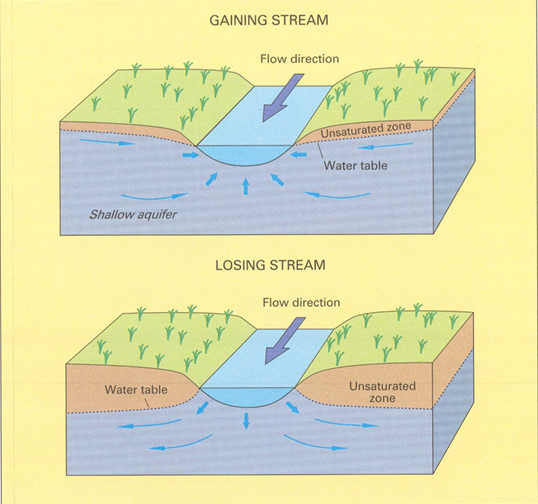
Diagram courtsey of USGS: Ground water and surface water – A Single Resource
What You Can Do
Everyone can help keep stormwater clean.
These simple habits keep pollution out of the stormwater system before it ever reaches our lakes and rivers.
Why It Matters
Stormwater connects every neighborhood in Grand Island. Water flowing off a driveway today may pass through a neighborhood lake, into the Platte River, or become part of the groundwater we rely on tomorrow.
Protecting our water starts where the rain falls.
Our Water, Our Responsibility
Continue Reading:
Explore the Water Cycle in Our Back Yard