
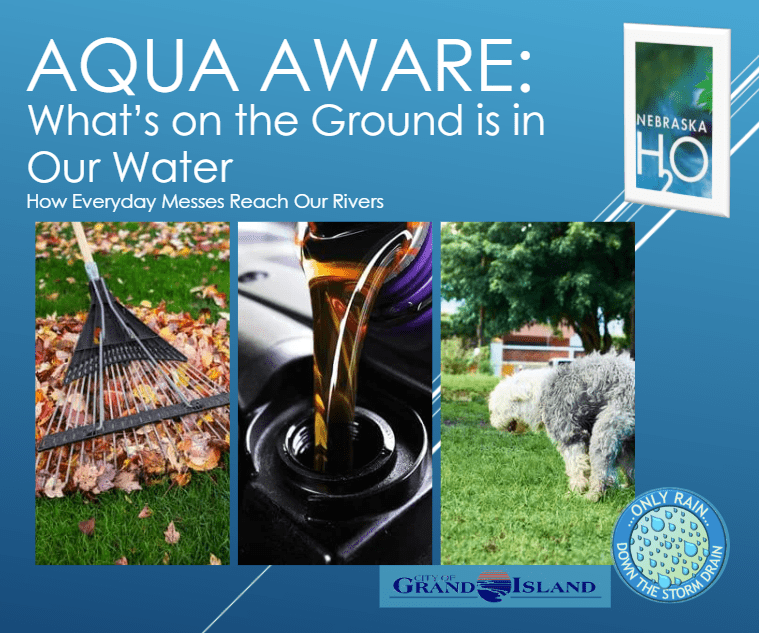
Every time it rains, water begins moving across our community.
It flows over rooftops, across driveways, through parking lots, down streets, and into storm drains. Along the way, it picks up whatever is in its path.
A forgotten soda cup.
Grass clippings.
Pet waste.
A little dirt from a landscaping project.
A few drops of oil beneath a parked car.
By themselves, none of those things seem like much.
Together, they become stormwater pollution.
Storm Drains Move Water—They Don’t Clean It
One of the biggest misconceptions about storm drains is that the water goes to a treatment plant.
It doesn’t.
Storm drains are built to move rainwater away from streets and neighborhoods to reduce flooding. In most cases, that water flows through pipes, ditches, ponds, and drainage channels before reaching local lakes, streams, wetlands, or the Platte River.
There isn’t a treatment step along the way.
Whatever the rain picks up usually stays with it.
It’s Not Just Trash
When people hear the word “pollution,” they often picture something dramatic.
An oil spill.
Illegal dumping.
A chemical accident.
Those things happen, but most stormwater pollution comes from ordinary, everyday activities.
Common pollutants include:
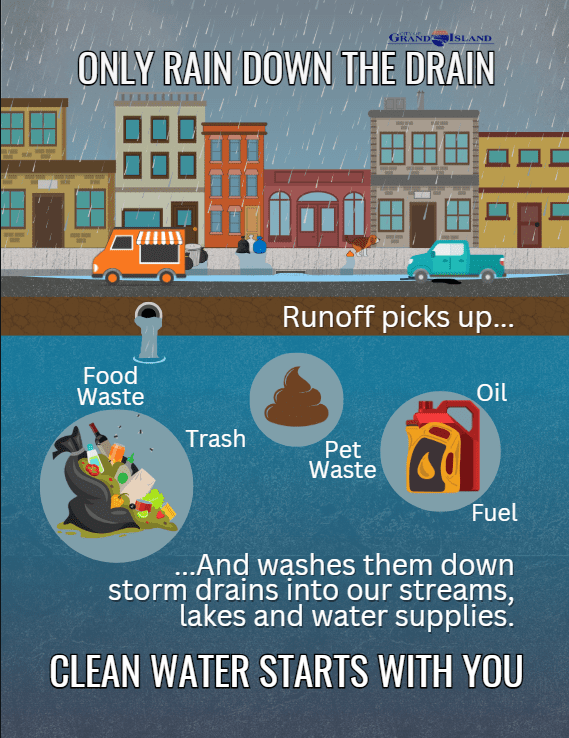
Pet waste — Adds bacteria and nutrients that can affect water quality.
Leaves and grass clippings — Break down in the water, releasing nutrients that contribute to algae growth. They can also block storm drains and reduce drainage capacity.
Litter — Plastic bottles, food wrappers, cigarette butts, and other trash don’t disappear after a storm. They simply move somewhere else.
Automotive fluids — Small leaks of oil, antifreeze, brake fluid, and other vehicle fluids collect on pavement until the next rainfall washes them away.
Fertilizers and pesticides — Products that help lawns and gardens can become pollutants when more is applied than plants can use or when rain washes them off before they soak in.
Sediment — Dirt may seem harmless, but it’s the most common pollutant in stormwater. It clouds the water, fills ponds and drainage channels, and often carries other pollutants with it.
Small Messes Become Big Problems
One yard doesn’t seem like much.
Neither does one driveway or one parking lot.
But stormwater doesn’t stop at property lines.
A rainstorm collects runoff from thousands of homes, businesses, streets, and neighborhoods, carrying everything together through the stormwater system.
That’s why pollution that starts in one place eventually affects the entire community.

What You Can Do
Protecting water quality doesn’t require special equipment or expensive projects.
It starts with a few simple habits:
- Pick up pet waste.
- Sweep driveways and sidewalks instead of hosing debris into the street.
- Keep leaves and grass clippings out of gutters and storm drains.
- Use lawn chemicals carefully and avoid applying them before rain is expected.
- Recycle used motor oil and properly dispose of household chemicals.
- Throw litter away instead of leaving it where wind and rain can carry it off.
None of these actions seems significant on its own.
Together, they make a measurable difference.
Why It Matters
Stormwater connects every neighborhood to our lakes, streams, wetlands, and rivers.
What’s left on the ground today may be carried into those waters with the next rainstorm.
Clean water doesn’t begin at the river’s edge.
It begins in our neighborhoods, one driveway, one yard, and one storm drain at a time.
Our Water, Our Responsibility.
Related Links:
Looking for more ways to protect water quality?
Visit Prevent Pollution Around Your Home to explore other everyday actions that help reduce stormwater pollution.