
A flooded basement is one of the last things any homeowner wants to deal with. The frustrating part is that the water isn’t always coming from the same place—or for the same reason.
Sometimes the problem starts on the surface. Other times it’s happening underground, where you can’t see it. Knowing what’s causing the water can help you decide what to fix before the next storm.
Groundwater Can Rise Above Your Basement Floor
Not every flooded basement is caused by rain running across the yard.
After several days of steady rain, the ground becomes saturated and the groundwater level begins to rise. As that water pushes against your foundation, pressure builds around the basement walls and floor. If it finds a crack, a joint, or another weak spot, it doesn’t take much for water to start seeping inside.
Homes near rivers, lakes, wetlands, or areas with naturally shallow groundwater often see this happen more frequently, but it can occur almost anywhere after a prolonged wet period.
Downspouts May Be Putting Water in the Wrong Place
Your roof sheds an incredible amount of water during a storm. If that water empties right next to the foundation, you’re concentrating hundreds of gallons exactly where you don’t want it.

Take a quick walk around your house and check that your downspouts:
- Extend several feet away from the foundation.
- Empty onto a lawn or landscaped area where water can soak in.
- Aren’t clogged, crushed, or disconnected.
A simple downspout extension is one of the least expensive improvements you can make, and it often solves a surprising number of drainage problems.
Check the Slope Around Your Home
Water always takes the easiest path downhill.
If the soil around your house has settled over the years, rainwater may now be draining toward the foundation instead of away from it. Even a shallow low spot can collect enough water to create problems during a heavy storm.
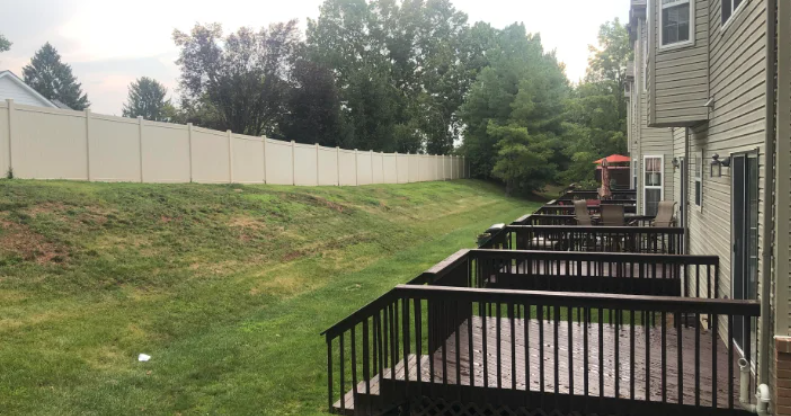
Watch for:
- Low areas next to the house.
- Water that sits against the foundation after it rains.
- Mulch or soil that has washed away over time.
Adding soil to restore a gentle slope away from the home can make a noticeable difference.
Small Cracks Can Let in a Lot of Water
Concrete is durable, but it isn’t waterproof.
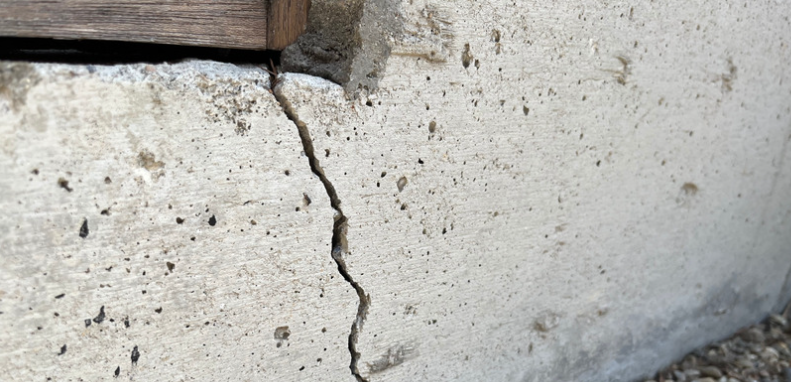
Tiny foundation cracks, gaps around utility lines, construction joints, and window wells can all become entry points once enough water builds up outside.
A crack that stays dry most of the year may suddenly leak during an unusually wet spring or after several large storms in a row.
Don’t Forget About the Sump Pump
If your home has a sump pump, it’s your last line of defense against rising groundwater.
Unfortunately, it’s also something many homeowners don’t think about until it stops working.
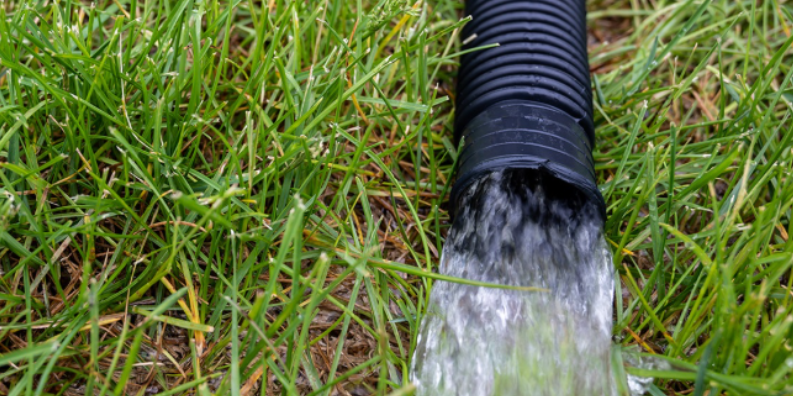
A sump pump may struggle if:
- The power goes out during a storm.
- The pump has reached the end of its service life.
- The discharge pipe is frozen or blocked.
- The pump isn’t large enough for the amount of groundwater entering the pit.
Testing it before storm season—and considering a battery backup—can help avoid an unpleasant surprise.
What You Can Do
You can’t control how much rain falls, but you can make it easier for water to stay away from your home.
A few good places to start:
- Extend downspouts away from the foundation.
- Keep gutters clean and flowing freely.
- Maintain a gentle slope away from the house.
- Test your sump pump before heavy rain arrives.
- Seal foundation cracks when appropriate.
- Reduce runoff by keeping healthy soil and vegetation around your property.
Small improvements made over time often provide the best long-term protection.
Why It Matters
A flooded basement is expensive, disruptive, and stressful. Fortunately, many of the conditions that lead to basement flooding can be identified before water ever reaches the floor.
The more water you can keep away from your foundation, the lower the risk when the next big storm rolls through.
Our Water, Our Responsibility.