

Heavy rain exposes every weak spot in a yard. Water shows up in low areas, creeps toward foundations, and sometimes moves faster than the ground can absorb it. You can’t stop stormwater from arriving, but you can change how it behaves once it hits your property.
Most of the time, it comes down to a handful of small fixes that add up.
Start with Your Downspouts
Your roof collects a surprising amount of water during a storm. If downspouts discharge next to your foundation, all that water concentrates in one area.
A one-inch rain falling on a typical home can produce hundreds of gallons of runoff.

What to do:
- Extend downspouts away from your foundation.
- Direct water toward lawns or landscaped areas where it can soak into the ground.
- Avoid discharging water onto sidewalks, driveways, or neighboring properties.
- Keep splash blocks and extensions clear of debris.
A properly placed downspout is one of the easiest ways to reduce standing water near your home.
Improve Grading Around Your House
Water follows slope, even when it’s subtle.
If the ground tilts toward your house, it will collect there—against foundations, near basements, around crawl spaces.
After a storm, those are the spots that stay wet longest.
A small adjustment can make a big difference.
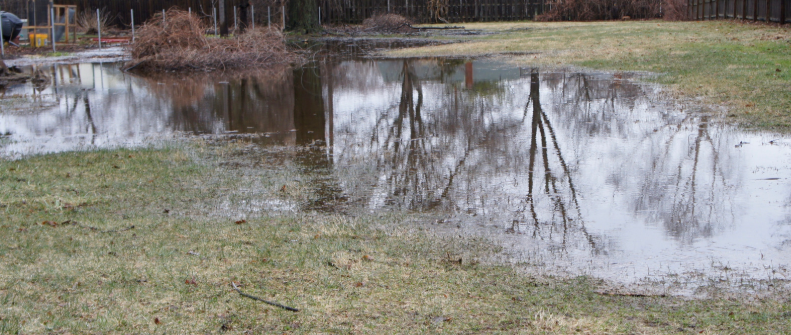
Look for:
- Low spots near exterior walls
- Areas where water remains for more than a day after rain
- Soil that has settled over time
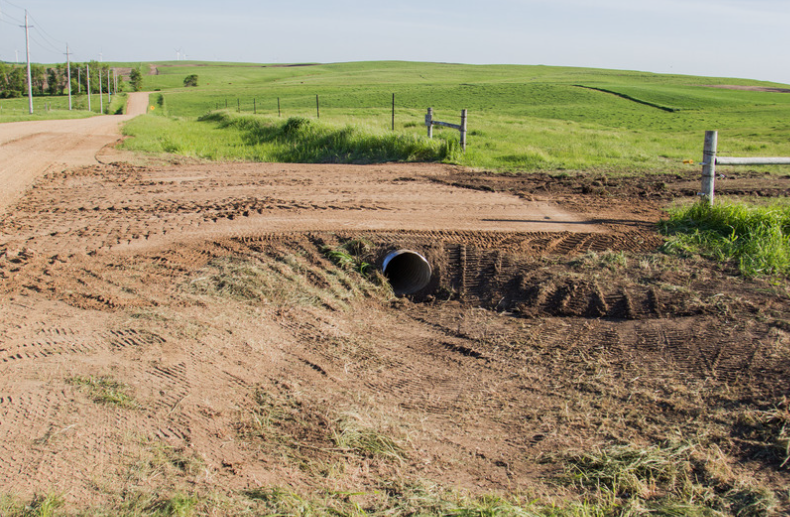
What to do:
- Add soil where necessary to create a gentle slope away from buildings.
- Maintain existing drainage swales.
- Avoid blocking natural drainage paths with landscaping or structures.
Small grading improvements can have a big impact during heavy storms.
Keep Water Moving On and Around Your Property
Stormwater slows down when it hits clutter.
Leaves, grass clippings, sediment, and litter all act like small roadblocks. One or two won’t matter. Enough of them will.
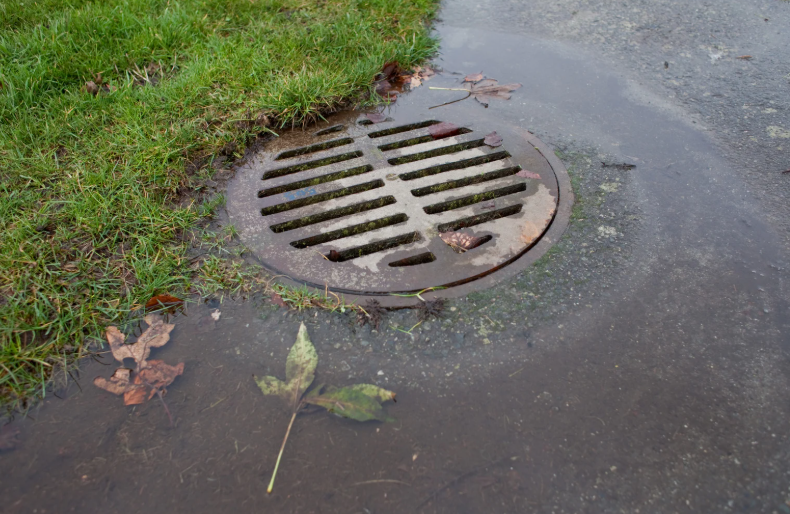
What to do:
- Sweep grass clippings and leaves off streets and sidewalks.
- Keep nearby storm drains clear of debris.
- Remove materials that may block drainage channels.
- Report damaged or clogged stormwater infrastructure to Public Works.
Water doesn’t need much help to move—it just needs a clear path.
Reduce Compacted Soil
Some yards shed water simply because the soil has lost its structure.
Years of mowing, foot traffic, equipment, even repeated wet/dry cycles can press soil down until it stops absorbing water well.
When that happens, rain runs across the surface instead of soaking in.
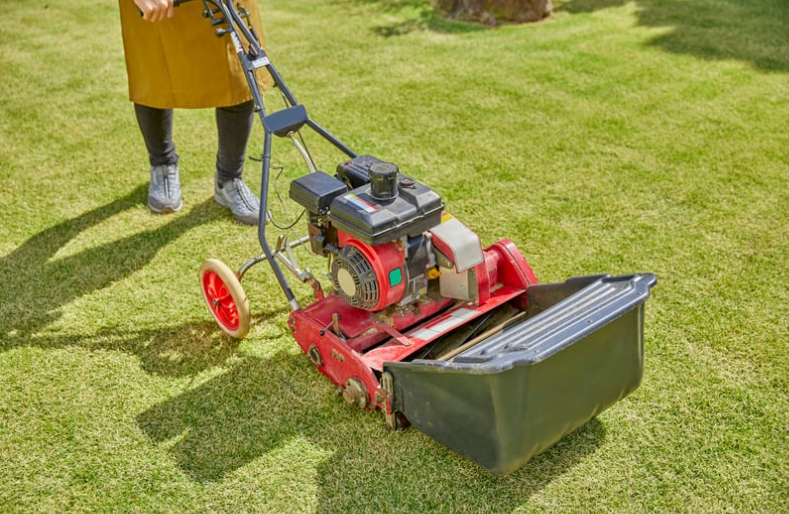
What to do:
- Aerate lawns when needed.
- Top-dress with compost to improve soil structure.
- Avoid unnecessary vehicle traffic on turf areas.
- Maintain healthy vegetation and root systems.
Healthy soil doesn’t feel dramatic. It just disappears water faster.
Consider a Rain Garden
Most yards already have a spot where water lingers after a storm. Instead of working against it, that spot can do the job it’s already trying to do.
A rain garden is just a shallow planted area that holds water temporarily and lets it soak in.
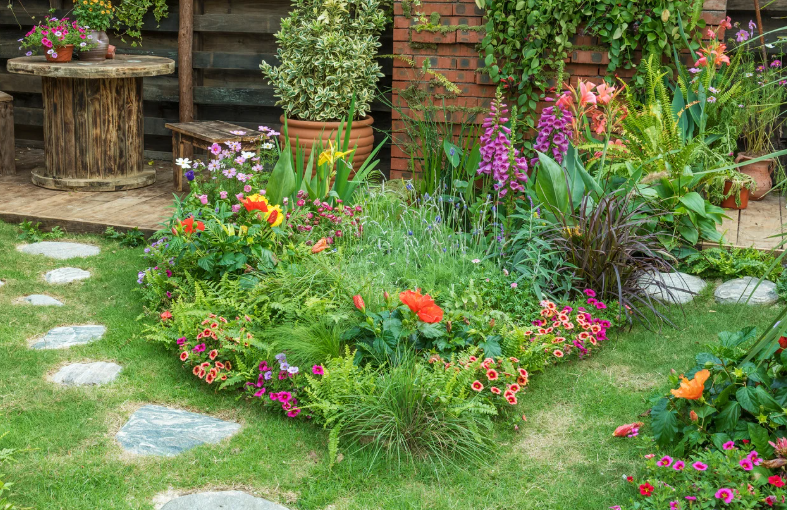
Benefits include:
- Reduced standing water
- Improved water quality
- Less runoff leaving the property
- Attractive landscaping
- Habitat for pollinators
They work best where runoff already concentrates—below downspouts, at the base of gentle slopes, or in those low corners that always stay damp.
Plant Trees and Native Vegetation
Plants change how water moves long before it ever reaches the ground.
Leaves break up rainfall. Roots open soil. Stems slow everything down just enough to give water time to soak in instead of rushing off.
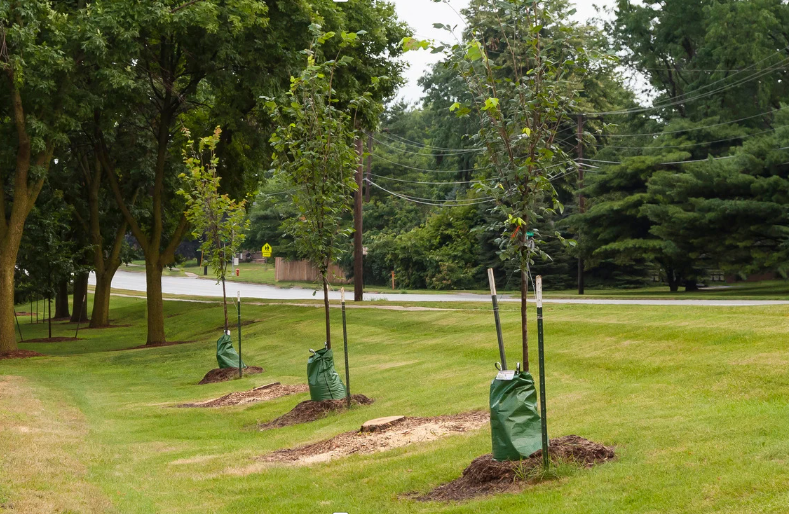
Benefits:
- Increased infiltration
- Reduced erosion
- Improved soil health
- Cooler, shaded soils that retain moisture longer
Trees do this at scale, but even smaller native plantings help.
Deep-rooted vegetation holds soil in place and improves infiltration over time. Turfgrass works, but native plants usually go deeper and stay active longer through changing conditions
Protect Natural Drainage Areas
Some parts of neighborhoods were never meant to be filled or flattened.
Swales, ditches, shallow channels—these are the places water is supposed to move through during storms.
They don’t look like much most of the year. Then it rains.
Keep them open.
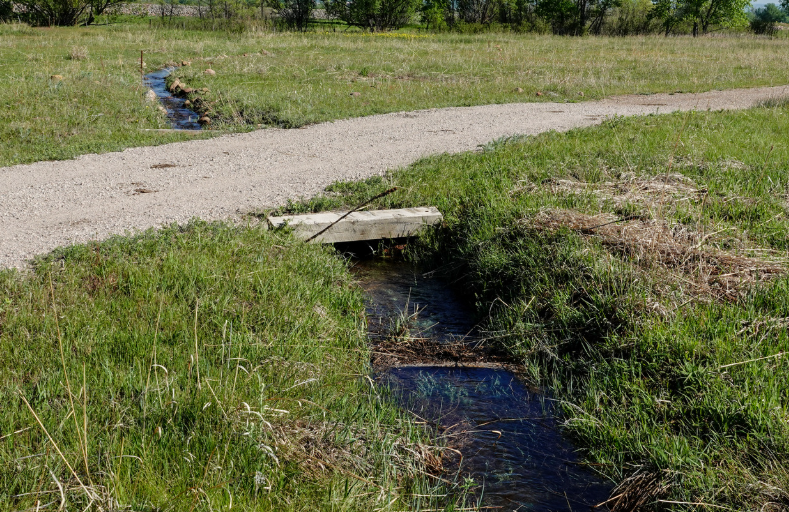
Avoid:
- Filling drainage swales with soil
- Blocking drainage paths with landscaping
- Installing structures that restrict water flow
When they’re left alone, they do their job quietly in the background.
Know When Flooding Is Beyond Your Property
Not every wet yard is a yard problem.
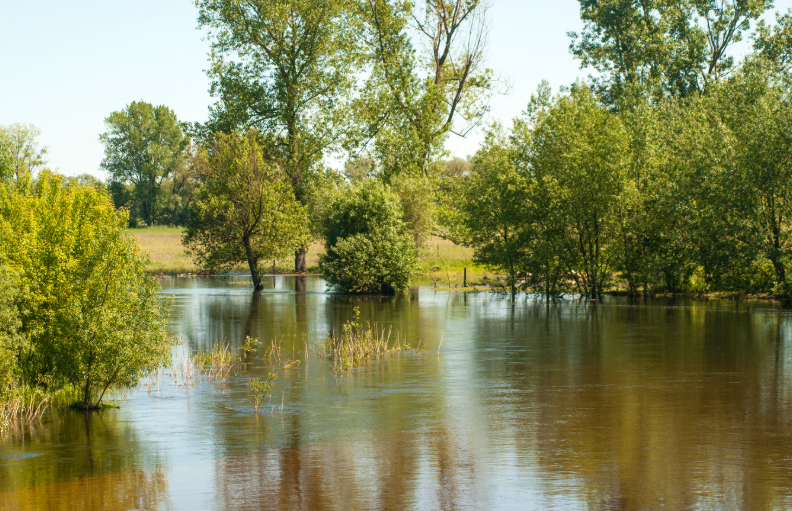
Examples include:
- Intense rainfall that exceeds system capacity
- High groundwater levels
- Blocked public infrastructure
- Regional flooding events
If water behavior suddenly changes or doesn’t match what your property usually does, it may not be coming from your property at all.
That’s when it’s worth contacting Public Works so the system can be checked.
Why It Matters
Flooding rarely comes from one big failure. It’s usually a collection of small conditions—water arriving a little too fast, soil a little too compacted, a path a little too blocked.
Fixing those pieces on individual properties adds up quickly.
Every yard that holds a little more water helps reduce pressure on the system as a whole. Less runoff in the street. Less strain on drains. Less water moving where it shouldn’t be.
Our Water, Our Responsibility.