
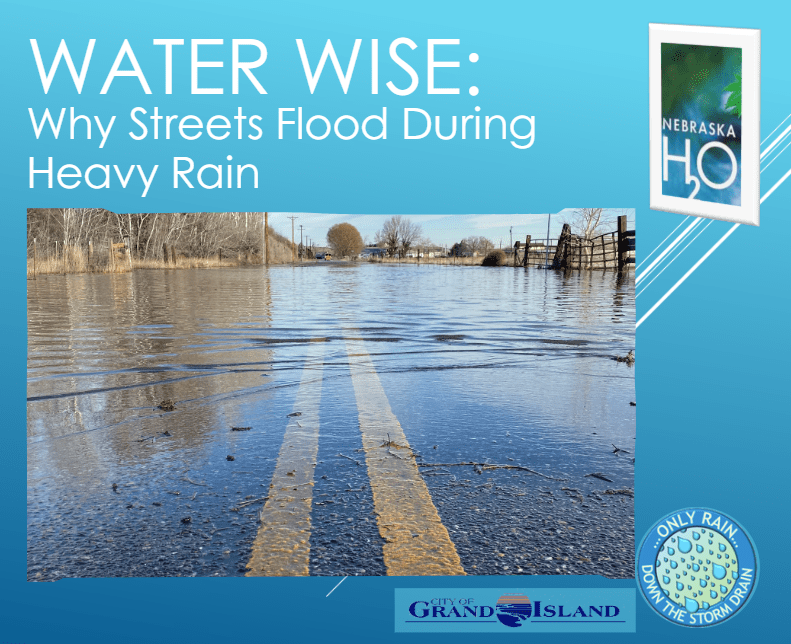
A summer thunderstorm rolls through Grand Island. Within minutes, water is pooling at intersections, running along curbs, and covering parts of the street.
If the storm drains are working, why is there still water on the road?
It’s one of the questions we hear most after a heavy rain.
Storm Drains Have Limits
Stormwater systems aren’t designed to keep every street completely dry during every storm. They’re designed to move water safely while protecting homes, businesses, and critical infrastructure.
Sometimes that means a street temporarily holds water so nearby buildings don’t.
Most storms are relatively small and pass through the system without issue. During larger storms, however, rain can fall faster than storm drains, pipes, ditches, and channels can carry it away.
Think of it like pouring water into a funnel.
Pour slowly, and the water flows through easily.
Pour too quickly, and water temporarily backs up until the funnel can catch up.
Stormwater systems work much the same way.
Rain Doesn’t Fall Evenly
A slow, steady rain gives storm drains time to keep up.
A thunderstorm that drops several inches in an hour is different. Water reaches the street faster than the drainage system can move it away, so temporary ponding is expected.
Urban Areas Create More Runoff
Every new roof, driveway, parking lot, and sidewalk sends more water toward the storm drain system.
That’s why communities also invest in rain gardens, native landscaping, and other green infrastructure. The more rain that soaks into the ground, the less has to move through pipes all at once.
Leaves, Debris, and Sediment Can Reduce Capacity
Storm drains work best when water can flow freely into and through the system.
Leaves, grass clippings, litter, and sediment can partially block storm drains and reduce the amount of water they can carry.
Residents can help by:
-
- Keeping leaves and debris away from storm drains
- Sweeping instead of hosing debris into the street
- Properly disposing of yard waste
- Reporting blocked storm drains when they are observed
One pile of leaves may not seem like much, but during a heavy rain it can block enough of a storm drain to slow water entering the system. That’s one reason keeping inlets clear is one of the simplest ways residents can help reduce street flooding.
Some Streets Are Designed to Store Water Temporarily
This surprises many people.
In some situations, streets provide temporary storage during large storms.
Allowing water to pond in roadways for a short period can help protect homes, businesses, and other structures from flooding.
While temporary street flooding may be inconvenient, it is often preferable to water entering buildings.
As stormwater moves through the system, these areas typically drain once capacity becomes available downstream.
Why Doesn’t the City Just Build Bigger Pipes?
It’s a reasonable question.
Could the City build pipes big enough to eliminate every flooded street?
In theory, yes.
In practice, it would require enormous pipes, massive detention areas, and costs far beyond what communities can reasonably afford.
Instead, communities balance:
-
- Public safety
- Cost
- Available space
- Environmental impacts
- Expected storm frequency
Stormwater systems are generally designed to manage common and moderately severe storms while reducing risk during larger events.
Even the largest systems have limits during extreme rainfall.
What You Can Do
Residents play an important role in reducing localized flooding.
You can help by:
-
- Keeping storm drains free of leaves and debris
- Directing downspouts toward vegetated areas when appropriate
- Maintaining rain gardens and other infiltration practices
- Reporting blocked inlets or drainage structures
- Avoiding dumping grass clippings, leaves, or trash into streets and ditches
Small actions across the community can improve drainage and help stormwater systems function more effectively.
Why It Matters
Seeing water in the street during a heavy storm doesn’t always mean something has failed.
Often, it means the system is doing exactly what it was designed to do—temporarily storing water while it moves safely downstream.
As Grand Island grows and more land is covered by roofs, streets, and parking lots, managing runoff becomes even more important. That’s why storm drains, detention ponds, rain gardens, and even the leaves we keep out of gutters all play a role in reducing flood risk.
Storm drains also lose capacity over time if they’re clogged with debris or if ditches and ponds gradually fill with sediment. Keeping the system clear—and keeping soil where it belongs—helps preserve the space needed to carry stormwater during heavy rain.
Understanding how the system works helps explain why a little patience after a storm—and a few simple actions throughout the year—can make a big difference.