
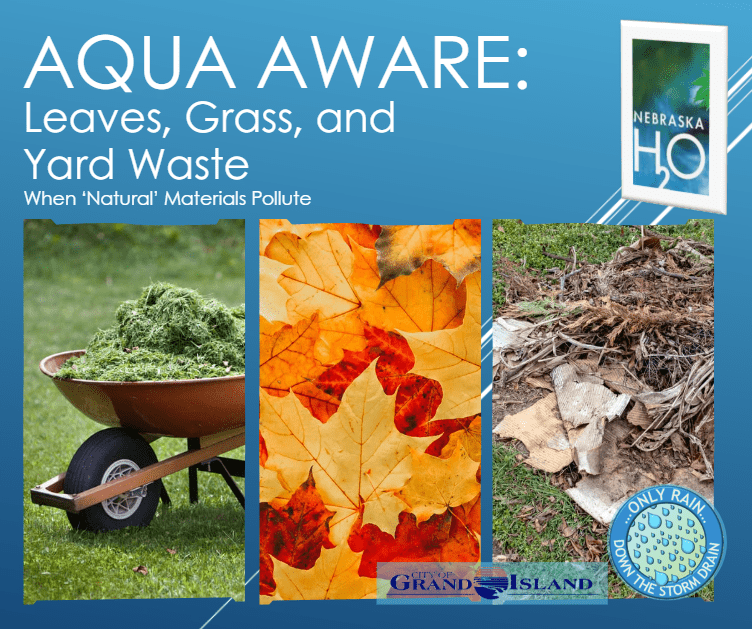
Spring cleanup and fall leaf season bring colorful yards and neatly trimmed lawns. It’s tempting to rake leaves or mow clippings directly into the street, the storm drain, or even nearby ditches. After all, it’s natural material — how could it possibly be harmful?
The answer: even natural yard waste can pollute waterways when it ends up in stormwater.
How Yard Waste Affects Water
When leaves, grass clippings, or yard trimmings enter storm drains or wash into waterways they can:
1. Add Excess Nutrients
As organic material decomposes, it releases nitrogen and phosphorus — nutrients that can trigger algal blooms in lakes and rivers. Algal blooms reduce oxygen and light in the water, harming fish and other aquatic life.
2. Clog Storm Drains and Pipes
Leaves and grass can accumulate in storm drains, slowing water flow and causing localized flooding during heavy rain.
3. Increase Sediment
Yard debris can trap soil and small particles, increasing the sediment load that enters lakes and streams in our area. Sediment will build up in stormwater pipes, culverts, and ditches. This reduces the system’s capacity to carry water, leading to more frequent localized flooding during heavy rains.
Why “Natural” Doesn’t Always Mean Safe
It’s easy to assume that because yard waste is organic, it won’t hurt the environment. But in reality, even natural debris can become pollution when concentrated or moved by stormwater. In our local lakes and rivers, this can:
-
Make water murky
-
Reduce habitat for fish and aquatic plants.
- Cause unseemly odors
-
Increase maintenance costs for stormwater systems
Actionable Tips for Residents
You can enjoy beautiful landscaping while protecting water quality. Here’s how:
-
Keep Yard Waste Out of Streets and Storm Drains
-
-
-
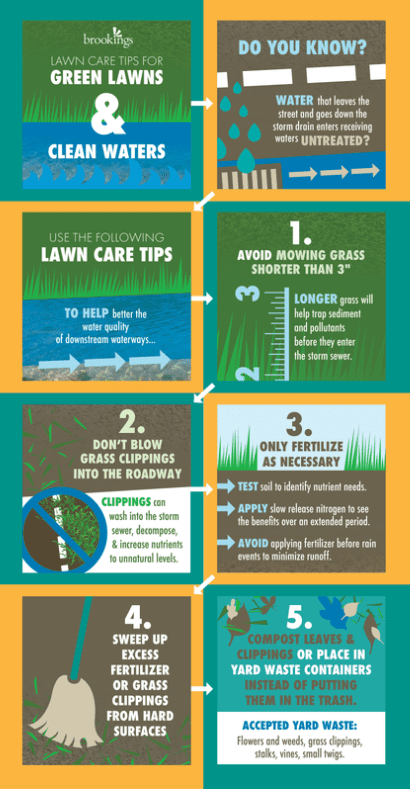
mulch leaves, grass, and clippings back into your lawn or garden
-
start composting
-
bag yard waste for curbside collection
-
-
-
-
Leave Buffers Near Waterways
-
-
-
filter runoff naturally by keeping a strip of tall native plants or grass where water moves across your property
- advocate for vegetative buffers in green spaces, along lakes, rivers, and ditches
-
-
-
-
Mow Wisely
-
-
-
use a mulching mower to finely chop grass clippings
-
do not allow clippings to accumulate in piles
-
always remove clippings from pavement, streets, and drains
-
-
-
-
Sweep Before Rain
-
-
-
sweep any clippings or leaves on sidewalks and driveways back into your yard before a storm
-
never use a hose to wash debris into the street
-
-
-
By keeping yard waste out of streets and storm drains, residents help reduce nutrient pollution and protect our lakes, rivers, and groundwater.