
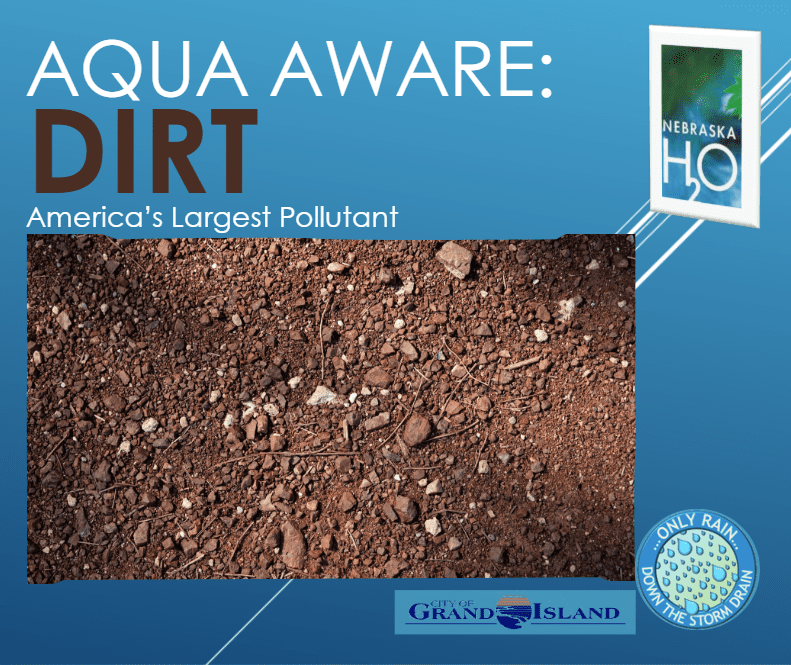
When people hear the words water pollution, they usually picture an oil spill, floating trash, or chemicals dumped into a river.
The biggest pollutant in stormwater is much less dramatic.
It’s dirt.
More specifically, it’s sediment—tiny soil particles carried away by rain and runoff.
Dirt belongs in gardens, fields, lawns, and construction sites. Once it washes into a storm drain, though, it becomes pollution. And over time, it creates one of the biggest challenges for both water quality and flood control.
When Dirt Leaves the Landscape
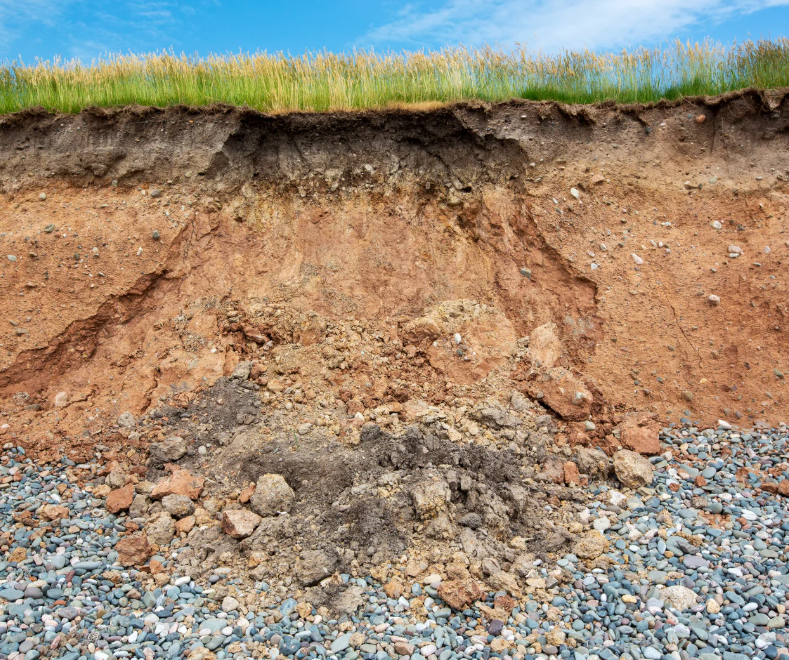
Rain falling on bare soil can wash thousands of tiny particles downhill.
Some settle in the street. Much of it flows into gutters, storm drains, roadside ditches, ponds, lakes, and creeks.
Once sediment enters the stormwater system, there’s no easy way to put it back where it came from.
Instead, it keeps moving until the water slows down enough for the soil to settle.
Dirt Doesn’t Disappear
This is where the real problem begins.
Every handful of soil that settles to the bottom of a pond, drainage channel, or creek takes up space that was designed to hold or carry water.
A little sediment after one storm isn’t noticeable.
Years of sediment buildup are.
Stormwater ponds become shallower. Drainage ditches gradually fill in. Channels carry less water. Pipes lose capacity.
Eventually, the same amount of rainfall has less room to go.
That’s one reason sediment contributes to localized flooding. The water hasn’t increased—the storage space has decreased.
Removing that accumulated sediment often requires expensive dredging or excavation to restore the system’s original capacity.

Sediment Carries More Than Dirt
Sediment rarely travels alone.
Fertilizers, pesticides, bacteria, oil, heavy metals, and other pollutants often attach themselves to soil particles.
As the dirt moves, those pollutants move with it.
Keeping soil in place helps prevent an entire package of contaminants from reaching local waterways.
Cloudy Water Is More Than an Eyesore
Sediment also changes what happens beneath the water’s surface.
Cloudy water blocks sunlight that aquatic plants need to grow. Fish can have a harder time finding food, and sediment settling on the bottom can smother habitat used by insects and other aquatic life.
Healthy streams and lakes depend on clean water, stable habitat, and enough sunlight to support the plants and animals that live there.
Where Does All That Dirt Come From?
Sediment can come from almost anywhere soil is exposed.
Some of the most common sources include:
-
- Construction sites with disturbed soil.
- New landscaping projects before grass is established.
- Bare spots in lawns.
- Streambanks and drainage ditches eroding during high flows.
- Soil and mulch washed into the street during yard work.
None of these may seem significant on their own, but together they add up across an entire community.

Keeping Soil Where It Belongs
Preventing sediment pollution is often as simple as keeping dirt in place.
You can help by:
-
- Maintaining healthy grass, trees, shrubs, and native plants to hold soil in place.
- Covering bare soil with mulch, vegetation, or erosion-control materials.
- Sweeping dirt and landscape debris back into lawns instead of washing it into the street.
- Stabilizing disturbed soil quickly during construction or landscaping projects.
- Keeping leaves and yard waste out of gutters, where they eventually break down into sediment and nutrients.
Every bit of soil that stays on the landscape is one less load entering the stormwater system.
Why It Matters
Stormwater systems are designed to move and temporarily store water—not dirt.
When sediment fills ponds, ditches, creeks, and drainage channels, they lose the capacity they were built to provide. That increases maintenance costs, reduces flood protection, and leaves less room for the next storm.
Keeping soil where it belongs protects water quality today and helps preserve the infrastructure that protects our community tomorrow.
Sometimes preventing flooding starts with something as simple as keeping the dirt in your yard.
Our Water, Our Responsibility
Looking for more ways to protect water quality?
Visit Prevent Pollution Around Your Home to explore other everyday actions that help reduce stormwater pollution.