
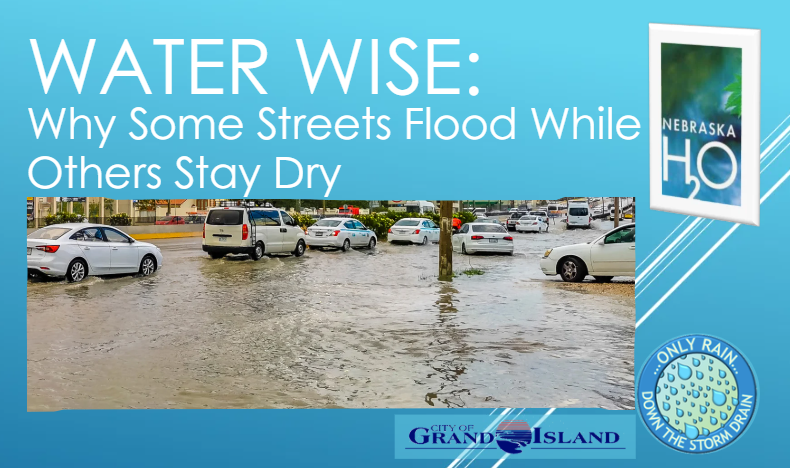
Have you ever driven across town after a heavy rain and noticed one street underwater while another, just a few blocks away, is completely dry?
It wasn’t because one neighborhood got more rain.
More often, it comes down to where the water is trying to go.
Water Doesn’t See Property Lines
Rain falls everywhere, but it doesn’t stay where it lands.
As soon as it hits the ground, gravity takes over. Water begins flowing downhill, following streets, lawns, ditches, driveways, and even subtle changes in elevation that most of us never notice.
That means runoff from several blocks may all end up in the same low spot.
When enough water reaches that location at the same time, temporary flooding can occur.
Low Spots Are Often Part of the Design
Not every flooded-looking area is a problem.
Many roads, intersections, ditches, and stormwater basins are intentionally built lower than the surrounding area. During larger storms, they provide temporary storage while water continues moving through the drainage system.
You might see water collecting in:
- Roadside ditches
- Low intersections
- Dry detention basins
- Areas near stormwater ponds
- Swales between neighborhoods
Most of the time, these areas drain once the storm passes and the system catches up.
Streets Sometimes Carry Water on Purpose
This surprises a lot of people.
During intense storms, many streets become part of the stormwater system.
Storm drains collect as much water as they can, but if rain falls faster than pipes and ditches can move it, the excess stays on the surface for a while.
In many cases, it’s safer for water to spread across a street for a short time than to force it into homes or businesses.
Seeing water in the roadway doesn’t necessarily mean something has failed.
Every Neighborhood Drains a Little Differently
Grand Island wasn’t built all at once.
Some neighborhoods rely on underground storm sewers.
Others use roadside ditches, culverts, or open drainage channels. Many areas use a combination of both.
The age of the neighborhood, the surrounding land, and the original design all influence how quickly runoff moves away after a storm.
That’s why two nearby streets can respond very differently to the same rainfall.
Why Isn’t There a Storm Drain Everywhere?
It’s a fair question.
Storm drains aren’t placed at every puddle or low spot. Engineers design drainage systems to move water efficiently while balancing construction costs, maintenance, available space, and expected rainfall.
In many locations, the street itself carries water to the nearest inlet or ditch.
That approach is often more effective than installing additional drains that would rarely be needed.
Debris Makes the Problem Worse
Even a well-designed system loses capacity when water can’t reach it.
Leaves, grass clippings, trash, and sediment can partially block storm drains and culverts, slowing the flow of water and increasing the chance of localized flooding.
The good news is that this is one area where residents can make a real difference.
What You Can Do
A few simple habits help stormwater move where it’s supposed to:
- Keep leaves and grass clippings out of streets and gutters.
- Avoid piling yard waste near storm drains or ditches.
- Report blocked or damaged storm drains to Public Works.
- Keep drainage paths on your property clear.
- Direct downspouts toward lawns or landscaped areas instead of pavement whenever possible.
None of these actions will stop a major storm, but together they help the drainage system work the way it was designed.
Why It Matters
Stormwater doesn’t spread evenly across a community. It follows the landscape.
That’s why one street may collect water while another stays dry, even during the same storm.
Understanding how runoff moves—and keeping the drainage system clear—helps explain why temporary flooding happens and how each of us can help reduce it.
Our Water, Our Responsibility.