
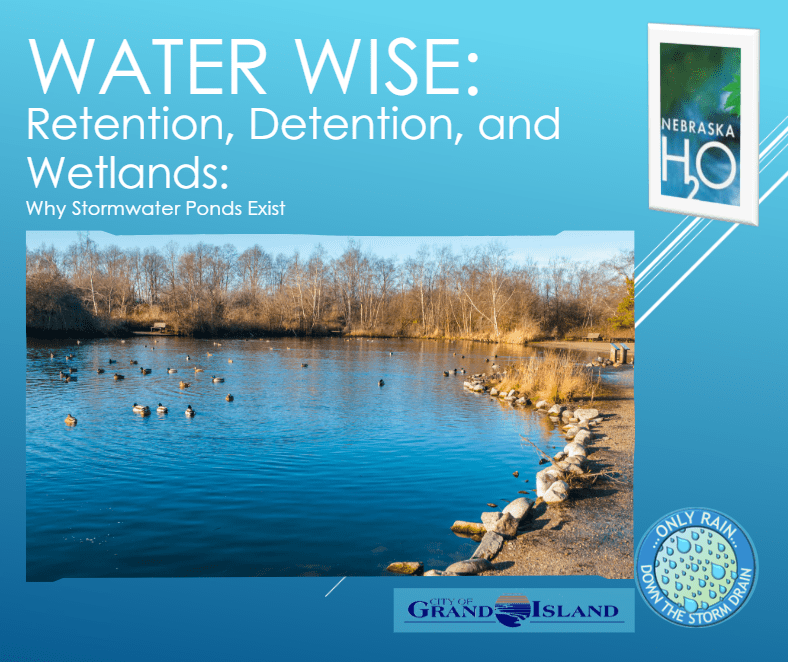
Drive around Grand Island after a heavy rain and you’ll notice something interesting.
Some neighborhoods have large grassy areas that suddenly fill with water before drying out a day or two later. Other parts of town have lakes that seem to rise and fall with the weather.
Neither is an accident.
They’re both part of Grand Island’s stormwater system, designed to reduce flooding and improve water quality.
Some are detention basins. Others are retention ponds or former sand pits that now help manage stormwater. A few areas function much like wetlands, using shallow water and vegetation to slow and filter runoff.
They may look different, but they all do the same basic job: hold water back so it doesn’t all arrive downstream at once.
The Fastest Way to Flood a City
When rain falls on rooftops, streets, parking lots, and driveways, it runs off much faster than it would from a prairie or farm field.
Without places to temporarily store that water, storm drains, ditches, and creeks would have to carry the entire storm all at once.
That’s when flooding becomes much more likely.
Stormwater basins act like a buffer, collecting runoff during the heaviest part of the storm and releasing it more slowly after the rain has passed.
Detention Basins: Usually Dry, Always Working
Most stormwater basins in Grand Island are designed to stay dry.
They may look like open grassy fields, neighborhood green spaces, or shallow depressions that seem unused most of the year.
Then a heavy rain arrives.
Water flows into the basin, spreads out, and is stored temporarily while the rest of the drainage system catches up. Once downstream water levels begin to drop, the basin slowly drains until it’s ready for the next storm.
If you’ve ever wondered why a park suddenly looks like a small lake after a thunderstorm, there’s a good chance it was designed that way.
Temporary flooding inside a detention basin helps prevent flooding somewhere else.
Retention Ponds and Sand Pit Lakes
Not every stormwater basin dries out.
Grand Island also uses permanent ponds, including several former sand pits that have become part of the stormwater system.
These ponds always contain water, but during storms they provide additional storage as water levels temporarily rise.
Because water remains in these basins longer, sediment has time to settle out before water continues downstream. Native vegetation around the shoreline also helps stabilize banks, filter runoff, and provide wildlife habitat.
Many residents see them as neighborhood lakes, but they’re also working pieces of public infrastructure.
Constructed Wetlands
Some stormwater areas combine shallow water with native vegetation to mimic the way natural wetlands function.
Instead of simply moving water, these areas slow it down.
Plants help trap sediment, stabilize soil, and absorb some pollutants before water continues through the system.
These projects are examples of green infrastructure working alongside pipes, culverts, and ditches.
What Happens During a Storm?
Whether water enters a dry basin or a permanent pond, the process is remarkably similar.
Runoff spreads out.
Water slows down.
Sediment begins settling to the bottom instead of continuing downstream.
The basin stores part of the storm while the drainage system keeps moving water away from streets and neighborhoods.
After the storm, stored water is released gradually or infiltrates into the ground, depending on how the basin was designed.
Slowing water by even a few hours can significantly reduce downstream flooding.
Why They Sometimes Look “Messy”
Stormwater basins aren’t designed to look like golf courses.
You may notice tall grasses, changing water levels, patches of native vegetation, or muddy areas after a storm.
That’s often a sign the basin is functioning as intended.
Those plants help slow runoff, hold soil in place, filter pollutants, and provide habitat for birds and pollinators.
A basin that’s a little wild is often doing its job better than one that’s perfectly manicured.
More Than Flood Control
Stormwater basins don’t just reduce flooding.
As runoff slows, dirt and sediment settle out instead of being carried farther downstream. Since sediment often carries nutrients and other pollutants with it, keeping that soil in the basin also helps protect water quality.
Every load of sediment that stays in a basin is one less load filling drainage ditches, reducing pipe capacity, or reaching the Platte River.
Over time, that means cleaner water, less maintenance, and more room in the drainage system for the next storm.
What You Can Do
Stormwater basins work best when the runoff entering them is as clean as possible.
You can help by:
- Keeping leaves, grass clippings, and trash out of streets and storm drains.
- Picking up pet waste before rain washes it away.
- Using fertilizers and pesticides only as directed.
- Staying out of vegetated basin areas whenever possible.
- Reporting illegal dumping around ponds, basins, or drainage channels.
Every piece of debris that stays out of the stormwater system helps these basins do the job they were built to do.
Why It Matters
Whether it’s a grassy basin that’s dry 360 days a year or a sand pit lake that’s always full of water, each one is part of the same system.
Together they slow runoff, reduce flooding, capture sediment, improve water quality, and protect the neighborhoods downstream.
The next time you drive past one, you’re not looking at unused land or just another pond.
You’re looking at infrastructure that’s waiting for the next storm.