
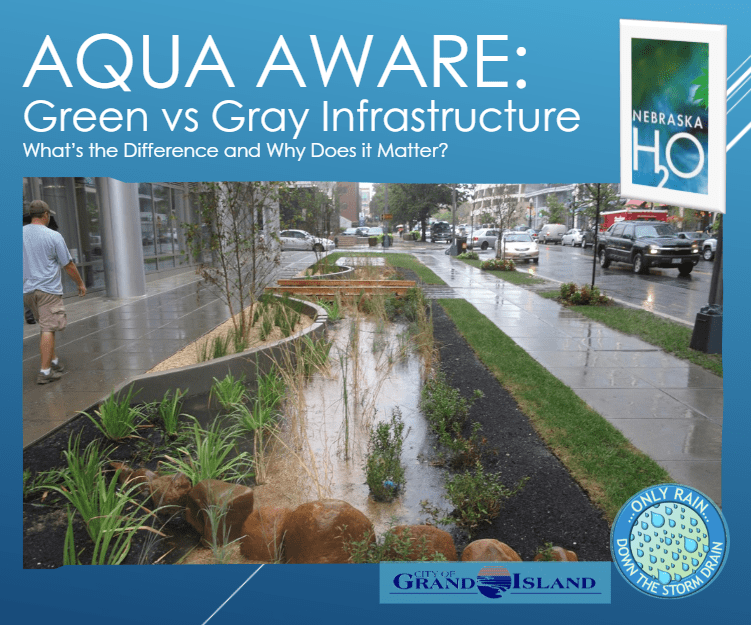
When people talk about stormwater, it usually gets split into two approaches: gray and green. Same problem, different tools.
Gray Infrastructure:
Gray infrastructure is the one you don’t think about until it’s clogged or buried under a street. Pipes, culverts, concrete channels, storm inlets. It’s built to move water—fast. Rain hits the ground, gets into a drain, disappears underground, and heads downstream.
That speed is the point. It keeps water off roads, out of basements, away from intersections. During a big storm, gray systems do the heavy lifting.
They also carry everything with them. Oil from pavement, pet waste, sediment, fertilizer, litter. Nothing gets filtered out along the way.
Green Infrastructure:
Green infrastructure works differently. It slows things down instead of speeding them up. It spreads water out, gives it time to soak in, and lets plants and soil do some of the work.
Rain gardens are a simple example—shallow planted areas that catch runoff from roofs or driveways. Vegetated buffers along ponds and streams act like rough edges that trap sediment before it reaches open water. Wet ponds and constructed wetlands hold water longer so particles can settle and nutrients can be taken up by plants.
None of it replaces pipes. It just changes what happens before water ever reaches them.
That’s where the two systems meet. Gray infrastructure moves water. Green infrastructure decides how much water even gets there in the first place. One handles capacity. The other reduces the load.
Together, they take pressure off the system and improve what comes out the other end. Less flooding in streets. Less erosion in channels. Cleaner water in ponds, rivers, and groundwater.
On the ground level, it’s smaller than it sounds. A rain garden in a yard. Native plants along a ditch. A strip of vegetation left in place instead of mowing everything flat. A parking lot that lets water pass through instead of shedding it all at once.
Small pieces, same idea.
Planting a rain garden or adding native vegetation where water already collects
Leaving vegetated edges along ponds and drainage areas instead of cutting everything back
Joining local planting or restoration projects when they show up in parks or neighborhoods
The split between gray and green isn’t really a choice between old and new. It’s a balance. Pipes keep cities functional during storms. Soil and plants keep those storms from overwhelming the pipes in the first place.
Our Water, Our Responsibility.
More Resources
Here are trusted resources where residents can learn how to plant a rain garden, select native plants, and implement green infrastructure at home: