
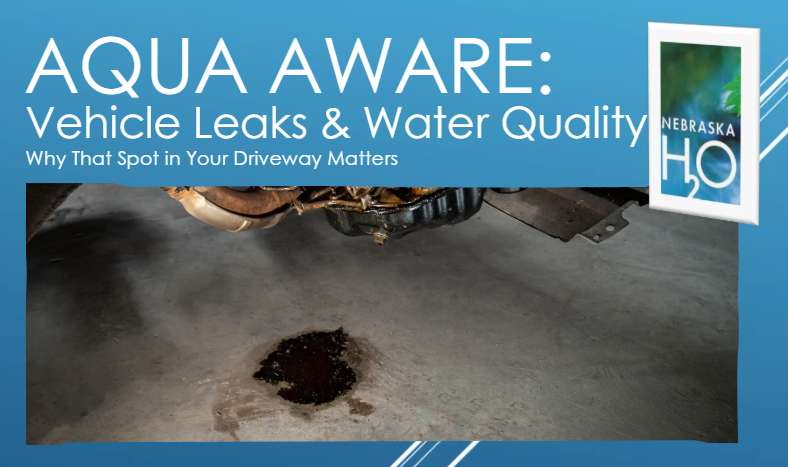
A few drops of oil on the driveway may not seem like much.
But every time it rains, those small leaks can be washed into the stormwater system and carried to nearby streams, rivers, or lakes. Because stormwater is generally not treated before it reaches local waterways, even routine vehicle leaks can contribute to water pollution over time.
The good news? Most leaks are easy to spot, and taking care of them helps protect both your vehicle and Nebraska’s water resources.
What can leak from a vehicle?
Modern vehicles contain several fluids that can escape through worn seals, damaged hoses, or aging parts.
Common vehicle leaks include:
- Motor oil
- Engine coolant (antifreeze)
- Transmission fluid
- Brake fluid
- Power steering fluid
- Differential or gear oil
- Fuel
- Windshield washer fluid
Some leaks are obvious, while others leave only a small stain that grows over time.
Why does it matter?
Rain doesn’t just wash away water—it picks up whatever is on the ground.
When vehicle fluids drip onto a driveway, parking lot, or street, rainfall can carry those pollutants into nearby storm drains. From there, they may flow directly into local waterways.
Even small amounts of automotive fluids can affect water quality and aquatic life.
Know the signs
Check the area where you normally park your vehicle.
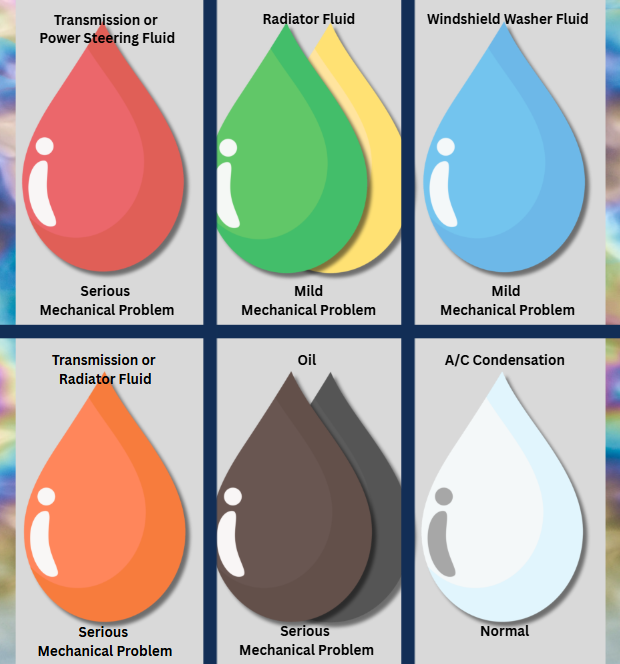
You may notice:
- Red or reddish-brown transmission or power steering fluid
- Bright green or yellow radiator fluid
- Blue windshield washer fluid
- Orange transmission or radiator fluid
- Dark brown or black oil spots
- Colorless air conditioner condensation
- Rainbow-colored sheens after rain
Finding a stain early can help you repair the problem before it becomes more expensive—or before more pollution reaches the stormwater system.
What should you do if your vehicle is leaking?
Repair leaks promptly
The best way to prevent pollution is to fix leaks before they become larger problems.
Many small leaks become expensive repairs if ignored.
Use a drip pan
If repairs can’t be made immediately, place a drip pan beneath the leak to catch vehicle fluids until the problem can be repaired.
Dispose of collected fluids properly. Never pour them into a storm drain or onto the ground.
Clean up spills with absorbent materials
If a leak leaves a fresh spill, soak it up with absorbent materials such as cat litter, oil absorbent, or commercial spill products.
Once the liquid has been absorbed, sweep up the material and dispose of it according to local guidance.
Sweep instead of spray
If absorbent material or debris remains after cleanup, use a broom to remove it.
Using a hose simply carries pollutants toward the stormwater system.
Prevent leaks before they start
Routine vehicle maintenance doesn’t just improve reliability—it also helps protect water quality.
Regularly inspect your vehicle for:
-
- Worn hoses
- Loose drain plugs
- Damaged seals
- Cracked fluid reservoirs
- Corroded lines
Addressing these problems early often prevents larger repairs later.
Every drop adds up
One leaking vehicle may not seem like a major pollution source, but thousands of vehicles are driven and parked in Nebraska communities every day.
Keeping automotive fluids off driveways and streets helps reduce pollution before it reaches local waterways.
Protecting water quality can start with something as simple as checking for a spot beneath your car.
Our Water, Our Responsibility
Continue Learning
Stormwater connects to many aspects of our community, from flooding and water quality to infrastructure and everyday actions at home. Explore these links to learn more about what you can do to at home to prevent pollution and protect local waterways.
-
- Pollution Prevention at Home
- Yard Waste: When Natural Materials Pollute
- Car Washing: Keep Soapy Water Out of Storm Drains
- Power Washing: Clean Your Home Without Polluting Local Waterways
- Dirt: America’s Largest Water Pollutant
- How Lawns Pollute – And How They Can Help Protect Water
- Fall Stormwater Pollution