
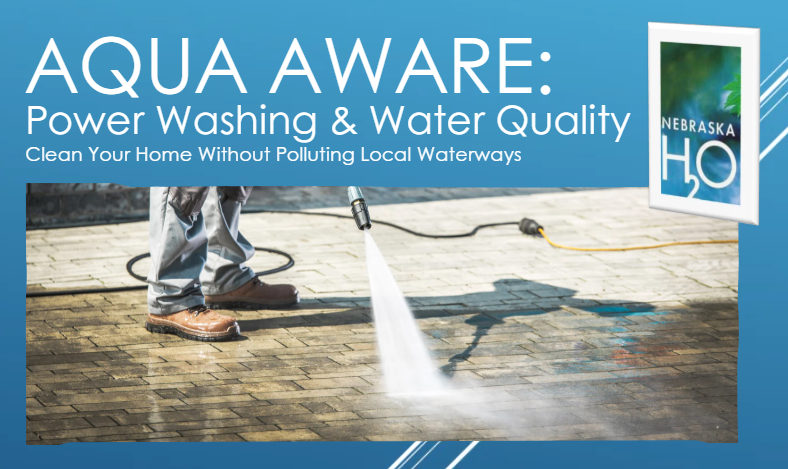
Power washing is a fast and effective way to clean driveways, sidewalks, decks, fences, siding, and patios. It removes dirt, algae, mold, stains, and years of built-up grime.
What many homeowners don’t realize is that everything being washed away has to go somewhere.
If dirty wash water flows into a storm drain, it may carry pollutants directly to nearby streams, rivers, or lakes. Unlike wastewater from your home, stormwater is generally not treated before it enters local waterways.
With a little planning, you can clean your property while helping protect water quality
What is in power washing runoff?
Power washing removes much more than dirt.
Depending on the surface, runoff may contain:
- Dirt and sediment
- Mold and mildew
- Algae
- Paint chips
- Wood stain or sealant residue
- Oil and grease
- Fertilizer residue
- Pet waste
- Cleaning products and detergents
As the water travels across your driveway or sidewalk, it can also pick up additional pollutants before reaching a storm drain.
Why storm drains matter
Storm drains are designed to move rainwater away from streets and neighborhoods to reduce flooding.
They are not designed to treat polluted water.
When wash water enters a storm drain, the pollutants it carries can reach local waterways, where they may affect fish, wildlife, and water quality.
Tips for cleaner cleaning
Sweep before you spray
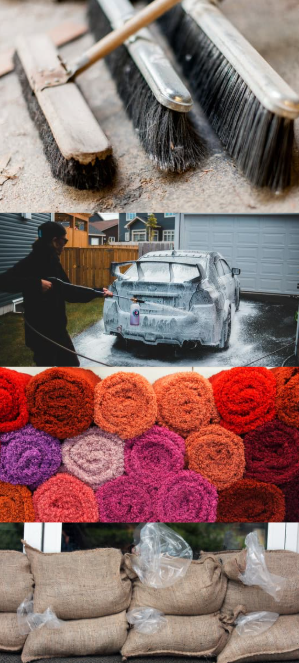
Remove leaves, grass clippings, dirt, and loose debris with a broom before power washing. You’ll use less water and prevent extra material from washing away.
Use detergents only when necessary
Many cleaning jobs require only water and pressure.
If a detergent is needed, choose the smallest effective amount and avoid allowing soapy water to enter the storm drain.
Direct water onto landscaped areas when possible
Grass and soil can help slow, absorb, and filter small amounts of runoff.
Avoid directing wash water into streets, gutters, or storm drains.
-
- If you’re washing a sidewalk or patio, start at the end farthest from the street so the rinse water naturally moves toward a landscaped area instead of the gutter.
- An old towel placed across the low edge of a driveway will slow runoff surprisingly well.
- The same sandbags you keep on hand for winter driving for spring flooding can be used to direct water. One or two laid across the driveway create a temporary diversion.
- As you’re rinsing, use a push broom to direct water toward the grass instead of letting it run straight to the curb.
Protect nearby storm drains
If you’re cleaning a driveway or sidewalk near a storm drain, watch where the runoff is flowing. Simple barriers, berms, or absorbent materials can help redirect water away from the drain while you clean.
Clean up paint and chemicals separately
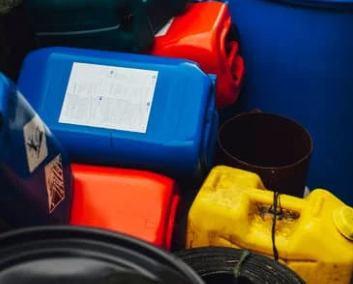
Pressure washers should never be used to wash paint, solvents, or hazardous chemicals into the street.
If you’re removing old paint or using chemical cleaners, collect and dispose of waste according to local guidelines.
Special care for concrete driveways
Concrete often collects automotive fluids, fertilizer, and other pollutants.
Power washing these surfaces can wash those pollutants directly into the stormwater system if runoff is not managed carefully.
Sweeping first and minimizing runoff helps reduce the amount of pollution leaving your property.
Hiring a professional?
Many professional power washing companies use equipment and practices designed to collect or manage wash water, especially for commercial jobs.
If you’re hiring a contractor, ask how they plan to keep wash water out of nearby storm drains.
Every project can protect water quality
Power washing helps maintain your home and property, but it also creates runoff that deserves a little attention.
By sweeping first, using detergents sparingly, and keeping dirty wash water out of storm drains, you can keep your property looking its best while helping protect Nebraska’s rivers, streams, and lakes.
Our Water, Our Responsibility
Continue Learning
Stormwater connects to many aspects of our community, from flooding and water quality to infrastructure and everyday actions at home. Visit Pollution Prevention Around Your Home to explore some of those everyday actions that help reduce stormwater pollution.