
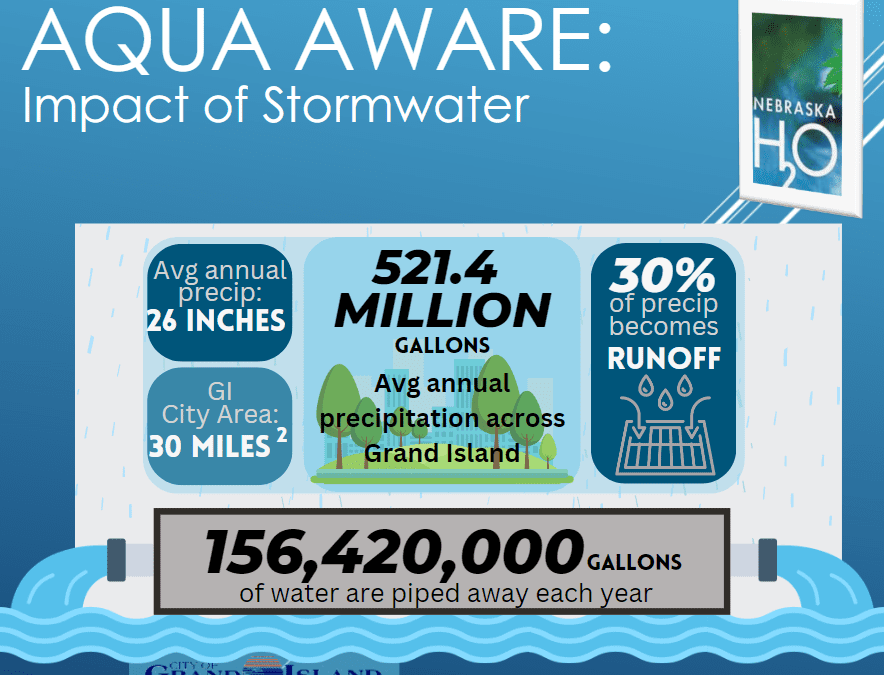
Stormwater is a natural part of Nebraska’s water cycle, but when rain falls on developed areas such as rooftops, streets, parking lots, and driveways, it behaves differently than it would in natural landscapes.
Instead of soaking into the ground, water often flows across hard surfaces as stormwater runoff. As it travels, runoff can carry pollutants, contribute to flooding, and affect local waterways.
Understanding the impact of stormwater helps communities make informed decisions about water quality, flood reduction, and long-term water resource management.
Stormwater Can Affect Water Quality
Rainfall may appear clean when it falls from the sky, but stormwater can collect pollutants as it moves across the landscape.
Common pollutants carried by stormwater include:
-
- Pet waste
- Fertilizers and pesticides
- Grass clippings and leaves
- Vehicle fluids
- Litter and debris
- Sediment (soil and dirt)
Because stormwater is typically not treated before entering waterways, these pollutants can reach streams, rivers, lakes, and wetlands.
Stormwater Can Contribute to Flooding
Natural landscapes absorb rainfall through vegetation and healthy soils.
As communities grow, more surfaces become paved or developed. These hard surfaces prevent water from soaking into the ground and increase the amount of runoff entering drainage systems.
During heavy rainfall, runoff can exceed the capacity of storm drains, ditches, streams, and rivers, increasing the risk of flooding.
Explore Residential Flooding:
Stormwater Runoff Can Reduce Groundwater Recharge
When rainfall infiltrates into the soil, it helps replenish groundwater supplies.
When rainfall becomes runoff instead, less water reaches the ground below.
Infiltration practices such as rain gardens, vegetated swales, permeable surfaces, and other forms of green infrastructure can help water soak into the ground where it falls.
Stormwater Adds Up Quickly
Stormwater is often discussed one raindrop at a time, but the real challenge is the volume of water generated during a storm.
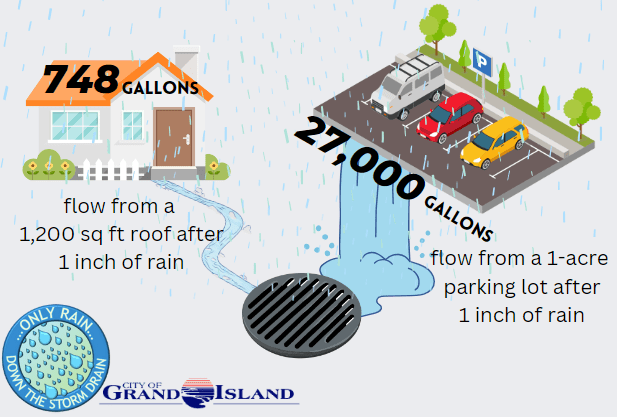
Consider a typical 1,200-square-foot roof. A single inch of rainfall can produce nearly 750 gallons of runoff. A one-acre parking lot can generate more than 27,000 gallons from the same storm.
When thousands of rooftops, driveways, streets, and parking lots shed water at the same time, stormwater systems must move enormous volumes of water quickly to reduce flooding.
This is why communities invest in storm drains, ditches, detention ponds, green infrastructure, and flood-reduction projects.
Stormwater Can Change Stream Temperatures
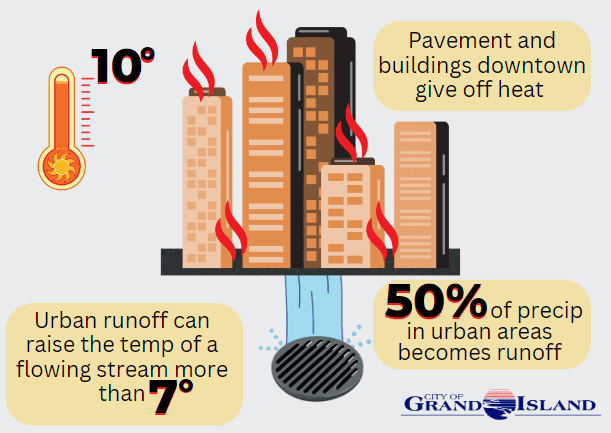
Hard surfaces such as roads, sidewalks, and parking lots absorb heat from the sun throughout the day.
When rain falls on these surfaces, runoff can become significantly warmer than the natural environment around it.
As warm runoff enters streams, lakes, and wetlands, it can raise water temperatures and create stress for fish, insects, and other aquatic life.
Trees, vegetation, rain gardens, and other forms of green infrastructure help reduce these effects by providing shade and slowing runoff.
Stormwater Carries More Than Water
As runoff travels across the landscape, it picks up whatever is left on the ground.
Common pollutants include:
-
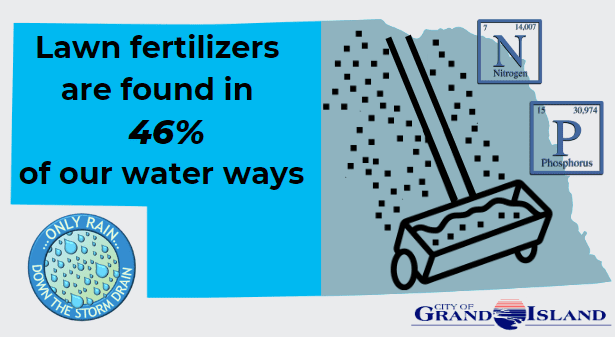
- Lawn fertilizers
- Herbicides and pesticides
- Pet waste
- Dirt and sediment
- Vehicle fluids
- Trash and litter
Individually these sources may seem small. Across an entire community, however, they become one of the largest sources of pollution entering local waterways.
That is why stormwater programs focus on pollution prevention. The easiest pollutant to remove from stormwater is the one that never enters it in the first place.
Small Actions Make a Big Difference
Residents can help reduce the impact of stormwater by:
-
- Picking up pet waste
- Keeping litter out of streets and storm drains
- Applying lawn chemicals responsibly
- Directing downspouts to vegetated areas
- Planting native vegetation
- Using rain barrels where appropriate
Individual actions may seem small, but collectively they help protect Nebraska’s water resources.
Why It Matters
Stormwater affects more than flooding.
It influences water quality, groundwater recharge, stream health, recreation, wildlife habitat, and the long-term sustainability of local water resources.
Every roof, driveway, parking lot, lawn, and street affects how rainwater moves through a community. The choices we make on our properties influence the amount of runoff, flooding, and pollution that reaches local waterways.
Whether it is picking up pet waste, sweeping instead of hosing, planting native vegetation, or managing runoff at home, small actions add up. When thousands of residents make water-friendly choices, the benefits extend far beyond individual properties.
Our Water, Our Responsibility
Continue Reading:
Explore our Healthy Lawns, Healthy Waterways guide for things you can do at home.
